
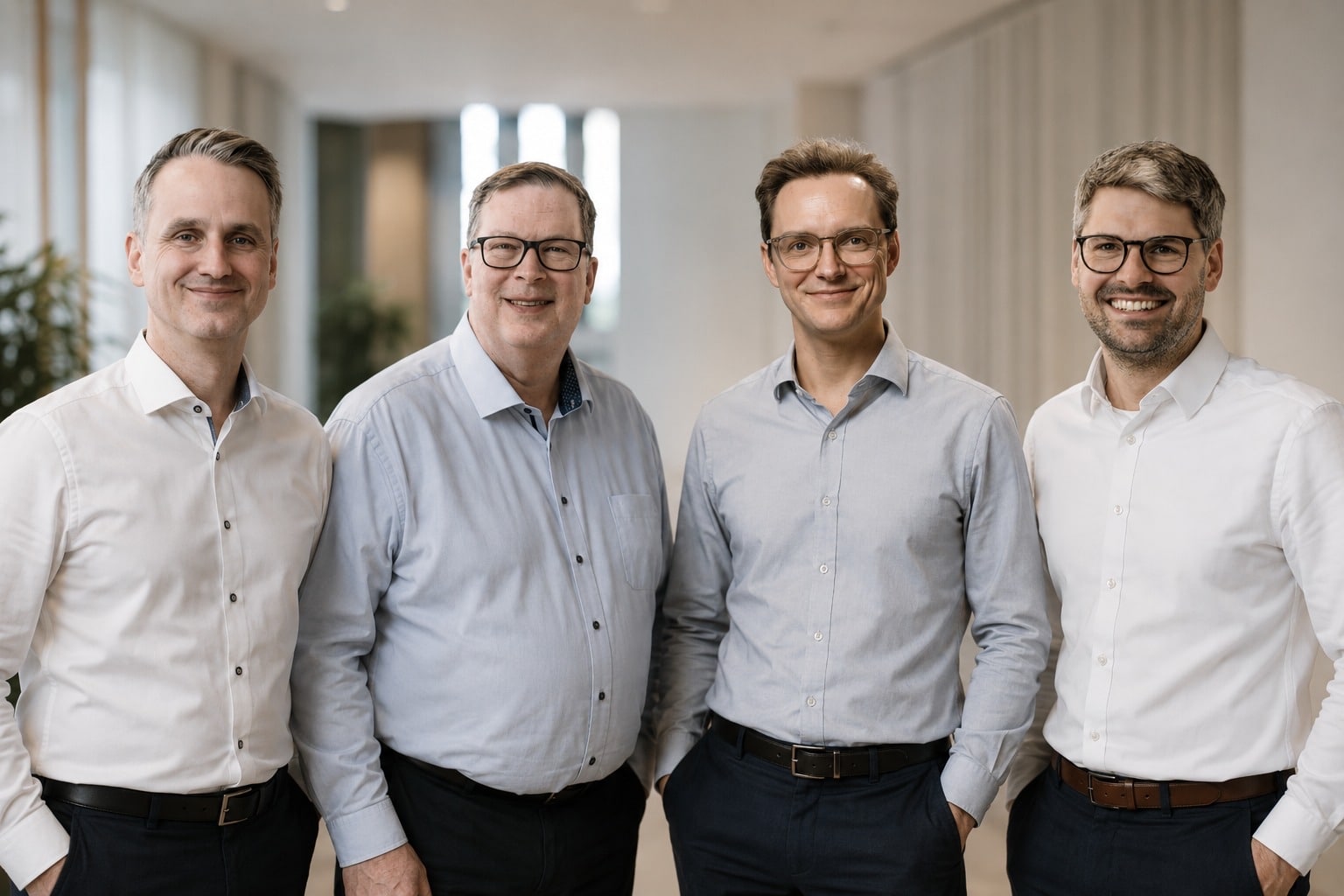
Wakeline, a Düsseldorf-based deep-tech startup developing AI systems that learn during live operation, has raised €2.1M in pre-seed funding led by TechVision Fonds, with participation from neoteq ventures.
Founded in 2025, the company will use the capital to develop its platform further, expand its go-to-market efforts, and grow its team. Current applications span real-time forecasting for European energy markets, industrial manufacturing, and neurological research.
Addressing The Market Opportunity
Every AI model in use today follows the same basic structure: trained on historical data, deployed, and updated at intervals. The gap between the moment a model is trained and the moment it encounters reality means these systems are structurally always one step behind the environments they operate in.
For applications where conditions shift continuously, such as energy market pricing, industrial production lines, or medical diagnostics, this lag is not a minor inconvenience but a fundamental limitation. Wakeline was founded on the premise that the architecture itself needs to change, not just the models built on top of it.

How The Technology Works
Wakeline’s platform is built on a biologically inspired architecture in which training and application are interwoven rather than running in separate phases. Instead of learning from historical data before deployment and then remaining static, Wakeline’s systems continue learning during live operation, adapting in real time to the environment in which they run.
The architecture is designed to operate without dependence on US hyperscalers or proprietary models, an approach the company describes as deliberate given the increasing importance of technological sovereignty in European AI development.
Wakeline’s first production application is real-time forecasting for European energy markets, where systems must adapt continuously to market shifts rather than waiting for periodic retraining cycles. The technology is also being applied in industrial manufacturing environments and in neurological research, including work on the early detection of Parkinson’s disease.
Growth And Market Traction
Wakeline was founded in 2025 by Tim Gülke, Jan Böggering, Simon Sprünker, and Merten Tiedemann. The company is at the pre-seed stage, with its initial applications in energy markets already in development and early-stage work underway in industrial and medical contexts. The round brings together two Rhineland-based investors with deep roots in the German deep-tech and technology startup ecosystem.
Expansion Plans
The €2.1M raise will fund continued platform development, go-to-market acceleration, and team expansion. Wakeline’s near-term focus is on proving its continuous-learning architecture across its three initial application areas before broadening into further industrial sectors.
Looking Ahead
Dr Ansgar Schleicher, Managing Partner at TechVision Fonds, described what distinguished Wakeline from the broader AI investment landscape: “Most AI investments today are bets on better models within the same architecture. Wakeline questions the architecture itself, and that is the rarer and more interesting approach. Continuously adaptive systems solve a problem the industry has simply accepted until now: that AI is always one step behind reality.”
Jan Jeske, Partner at neoteq ventures, explained the firm’s rationale: “What convinced us was the combination of scientific substance and a team that knows exactly which industrial problem it wants to solve first. We’re investing because we believe Europe needs its own architectures for the next generation of AI.”
About Wakeline
Wakeline is a Düsseldorf-based deep-tech company founded in 2025 by Tim Gülke, Jan Böggering, Simon Sprünker, and Merten Tiedemann. The company develops continuously adaptive AI systems built on a biologically inspired architecture that enables learning during live operation rather than relying solely on pre-deployment training. Current applications include real-time forecasting for European energy markets, industrial manufacturing environments, and neurological research.
