
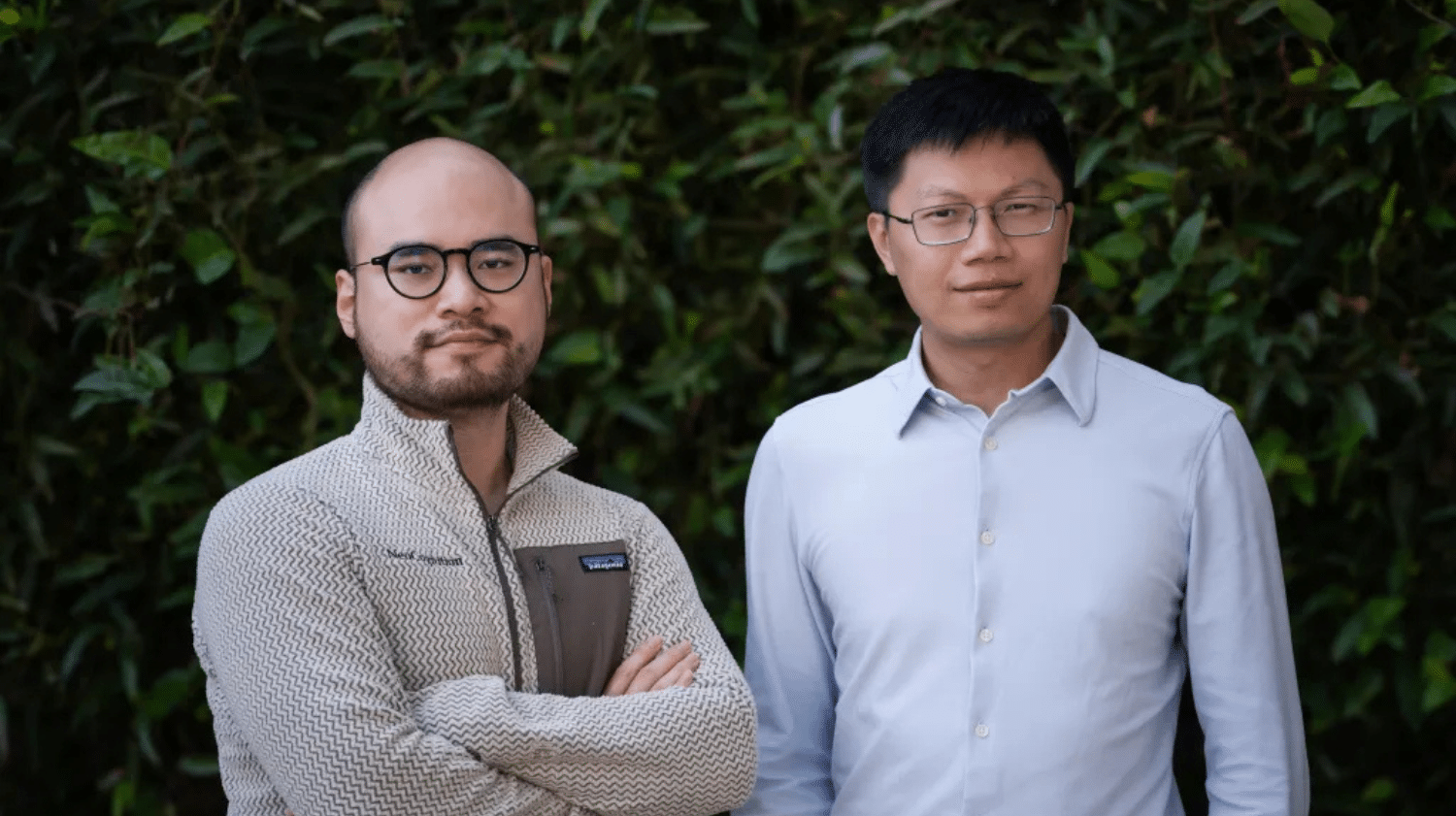
NeoCognition, an AI research-driven startup, has emerged from stealth with $40 million in seed funding to develop agents designed to learn and specialize like humans.
The round was co-led by Cambium Capital and Walden Catalyst Ventures, with participation from Vista Equity Partners and angels including Intel CEO Lip-Bu Tan and Databricks co-founder Ion Stoica. The company is positioning itself as a research lab building autonomous AI systems aimed at improving reliability and domain expertise in enterprise workflows.
What The Company Does
NeoCognition is developing AI agents that are designed to self-learn and specialize in specific domains rather than operate as general-purpose tools. The core idea is to build systems that can continuously adapt to new environments and tasks, gradually developing expertise in the same way humans learn a profession.
Founder Yu Su, an AI professor at Ohio State University, describes today’s AI agents as inconsistent generalists that require a “leap of faith” for each task they perform. He argues that current systems succeed only around half the time in completing assigned tasks reliably, which limits their usefulness as autonomous workers in real-world settings.
NeoCognition’s approach focuses on enabling agents to build internal “world models” of specific domains. Instead of relying on static training or predefined workflows, these systems are intended to learn continuously, improving performance through experience and adaptation.
The company is targeting enterprise applications, with a focus on helping software companies and large organizations deploy AI agents that can operate within specialized business environments.

Market Context / Industry Background
Enterprise AI adoption is accelerating, but reliability remains a key limitation. While large language models have improved rapidly, their performance in structured, high-stakes workflows such as operations, engineering, and customer-facing systems is still inconsistent.
Most current AI agent systems are either general-purpose tools or narrowly engineered for specific verticals. This creates a trade-off between flexibility and reliability, particularly in enterprise environments where accuracy and repeatability are critical.
At the same time, investors are increasingly backing research-driven startups that aim to improve foundational AI capabilities, particularly in areas such as autonomy, reasoning, and long-term task execution.
Founder / Investor Commentary
Yu Su said he initially resisted pressure from investors to commercialize his research, but ultimately chose to spin out NeoCognition when advances in foundational models made more personalized and adaptive AI systems feasible.
He noted that human intelligence is defined not just by general reasoning ability, but by rapid specialization within new environments. According to Su, the ability to build structured understanding of a domain is what enables humans to become effective in new roles.
He explained that NeoCognition aims to replicate this process in AI systems by enabling agents to autonomously build internal models of “micro worlds” such as industries, workflows, or business environments.
Su also highlighted that true autonomy in AI requires systems that can learn independently over time, rather than relying on pre-engineered vertical solutions.
Growth Plans / Use Of Funds
The funding will be used to expand NeoCognition’s research and engineering teams and further develop its self-learning agent architecture. The company currently has around 15 employees, most of whom hold PhDs, reflecting its research-heavy approach.
NeoCognition plans to bring its technology to market through enterprise partnerships, particularly with established software companies looking to integrate AI agents into their products and workflows.
Investor Vista Equity Partners is expected to play a strategic role in this effort, given its extensive portfolio of enterprise software companies that could adopt or embed NeoCognition’s agent systems.
About NeoCognition
NeoCognition is an AI research startup developing self-learning agent systems designed to operate with increasing autonomy in enterprise environments. Founded by Yu Su, the company focuses on building AI that can continuously adapt and specialize in new domains by constructing internal models of business and operational environments.
