
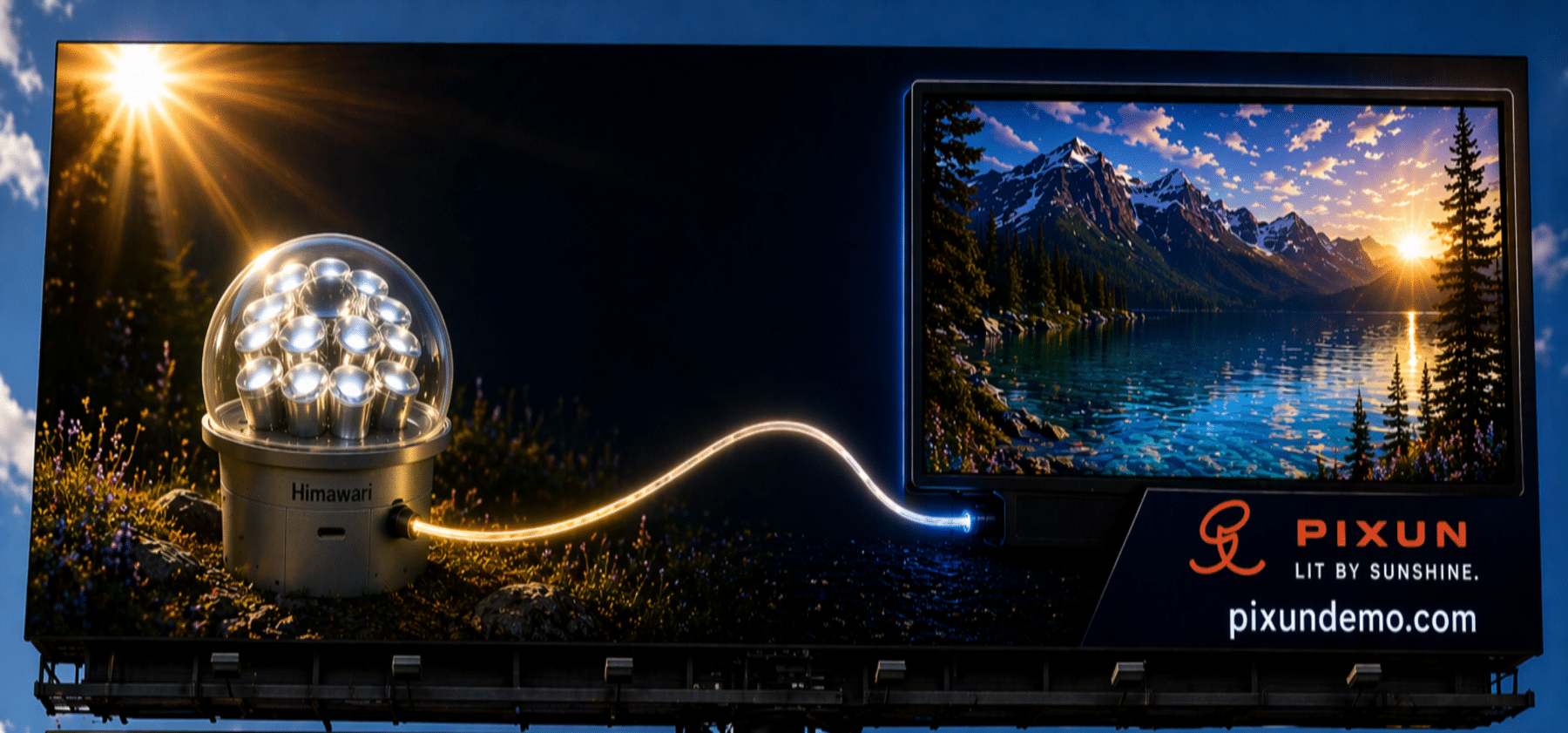
In the evolution of digital technology, screens have become sharper, brighter, and more color-accurate than ever before. Yet, despite these advances, one critical dimension has remained largely unaddressed: the biological impact of light on the human body. Pixun Technologies, a deep-tech startup operating at the intersection of optics, biology, and engineering, is positioning itself to redefine this paradigm.
Rather than incrementally improving artificial light, the company is developing a fundamentally new approach — one that integrates natural daylight directly into digital environments.
This shift could mark the beginning of a broader transformation in how technology is designed: not just for performance, but for human physiology.
A Structural Problem Hidden in Plain Sight
The modern workplace is built on artificial illumination. From LED office lighting to high-intensity displays, today’s environments prioritize visual clarity and productivity. However, research literature increasingly points to a mismatch between these artificial light sources and the conditions under which human biology evolved.
Natural daylight is dynamic and full-spectrum, providing time-of-day signals that regulate circadian rhythms, hormone production, and cognitive performance. Artificial light, by contrast, is typically static and spectrally limited.
The result is a growing list of issues associated with prolonged exposure:
- Digital eye strain and visual fatigue
- Disrupted sleep cycles
- Reduced cognitive performance over time
- Long-term circadian misalignment
While awareness of these effects has increased, most existing solutions — such as blue-light filters or adaptive brightness — remain incremental optimizations, not systemic fixes.
Pixun’s thesis is clear:
The problem is not how we adjust artificial light — but that we rely on it in the first place.
From Personal Experience to Scientific Inquiry
The origins of Pixun are rooted in firsthand experience rather than purely academic exploration.
Co-founder Peter Veto began investigating light after struggling with light sensitivity and digital eye strain — conditions that are becoming increasingly common in screen-centric environments. His symptoms improved significantly through increased exposure to natural daylight, prompting a deeper investigation into the role of light in human health.
At the same time, co-founder Liliana Lettieri — a scientist with a PhD in biology and a multidisciplinary background spanning chemistry, engineering, and color science — was exploring related challenges, particularly around circadian disruption.
Their collaboration revealed a critical gap: while the science of light and its biological effects is well-established in research environments, its translation into everyday technology remains limited.
This disconnect between knowledge and application became the foundation for Pixun’s approach.
The Defining Insight: Eliminating the Trade-Off
A pivotal moment in Pixun’s development came from a simple, yet revealing observation.
After working in a low-light laboratory environment, Veto moved to a workstation near a window to benefit from natural sunlight. However, the positioning of the sun behind his screen made it difficult to see the display, forcing him to block out the very light his body needed.
This scenario highlights a fundamental contradiction in modern design:
Users are often forced to choose between optimal visibility and optimal biological conditions.
Pixun’s core innovation is built around eliminating this trade-off — enabling users to work with natural light, not against it.
A New Technological Approach: Daylight Integration
Unlike conventional solutions that attempt to modify artificial light sources, Pixun is developing systems that incorporate natural daylight as a functional component of display technology.
This involves rethinking multiple layers of the technology stack:
- Light collection and transmission systems to capture daylight
- Optical integration mechanisms that combine daylight with electric light
- Display architectures designed to utilize concentrated daylight in any indoor space
- Display architectures designed to operate in dynamic lighting conditions
The objective is not merely to improve visual output, but to create an environment in which digital interaction aligns with biological needs.
Such an approach positions Pixun within a new category of innovation — one that extends beyond traditional consumer electronics into human-centric systems design.
Translating Complex Science into Usable Products
One of the primary challenges facing Pixun is the translation of complex, multidisciplinary science into intuitive user experiences.
Light, as a variable, operates across multiple domains:
- Physics (spectral and temporal properties and intensity)
- Biology (metabolic effects, circadian signaling)
- Vision (effects on clear focus, pupil and eye movements)
- Neuroscience (cognitive and behavioral effects)
For end users, however, the value proposition must remain simple:
better comfort, improved focus, and reduced strain.
Pixun’s strategy is to abstract this complexity into products that feel natural to use, leveraging an insight that requires no scientific explanation: people inherently respond better to daylight.
Market Context: The Rise of Human-Centric Technology
Pixun enters the market at a time when awareness around workplace well-being and digital fatigue is accelerating.
Trends supporting this shift include:
- Increased scrutiny of screen time and its health effects
- Corporate investment in employee well-being and productivity
- Growth of biohacking and performance optimization markets
- Demand for healthier remote and hybrid work environments
While many companies address these trends at the software or behavioral level, Pixun operates at a more fundamental layer: the physical environment itself.
Potential applications extend across:
- Office and enterprise environments
- High-performance workspaces (e.g., research labs, design studios)
- Healthcare and therapeutic settings
- Consumer electronics and home office setups
Strategic Outlook: Beyond a Single Product
Pixun’s long-term vision suggests ambitions beyond a standalone hardware solution.
The company is exploring a future in which light environments become:
- Adaptive to individual needs and time of day
- Personalized based on biological data
- Integrated with intelligent systems, including AI-driven optimization
Such a trajectory aligns with broader developments in smart environments and ambient computing, where technology operates seamlessly in the background while enhancing human performance.
Conclusion: Redefining the Role of Light in Technology
Pixun Technologies is addressing a foundational, yet often overlooked, element of modern life. By challenging the assumption that artificial light is sufficient — or even optimal — the company is opening a new frontier in technology design.
If successful, its approach could have implications far beyond displays, influencing how environments are built, how people work, and how technology interacts with human biology.
In an industry defined by incremental improvements, Pixun’s proposition stands out for its scope: not to refine existing systems, but to rethink them from first principles.
