
Gracia AI, a London startup developing full-stack technology for 4D Gaussian Splatting (4DGS), has raised $1.7 million from investors including EWOR and one of the early pioneers behind NeRF.
The raise positions the company as a fast-emerging force in a field that only started taking shape two years ago.
From Early Experiments to a Full Production Platform
When Gracia AI closed its first round in early 2024, the company was experimenting with static Gaussian Splatting and early research prototypes. Dynamic video splats didn’t exist yet.
Over the past year, the team has moved dramatically beyond those beginnings. Gracia AI became the first company to bring real-time 4DGS playback to standalone VR headsets—not just PCVR—removing the need for external hardware.
The company also introduced a production-ready VFX and CG pipeline, enabling studios to incorporate 4DGS into actual film and commercial workflows for the first time. Alongside this, Gracia built a creative toolset for editing, camera control, and scene manipulation directly in 4DGS.
Today, the startup offers a complete tech stack for deploying 4DGS content across XR, VFX, gaming, advertising, and next-generation creative applications.

A Startup Sparked by a Viral Demo
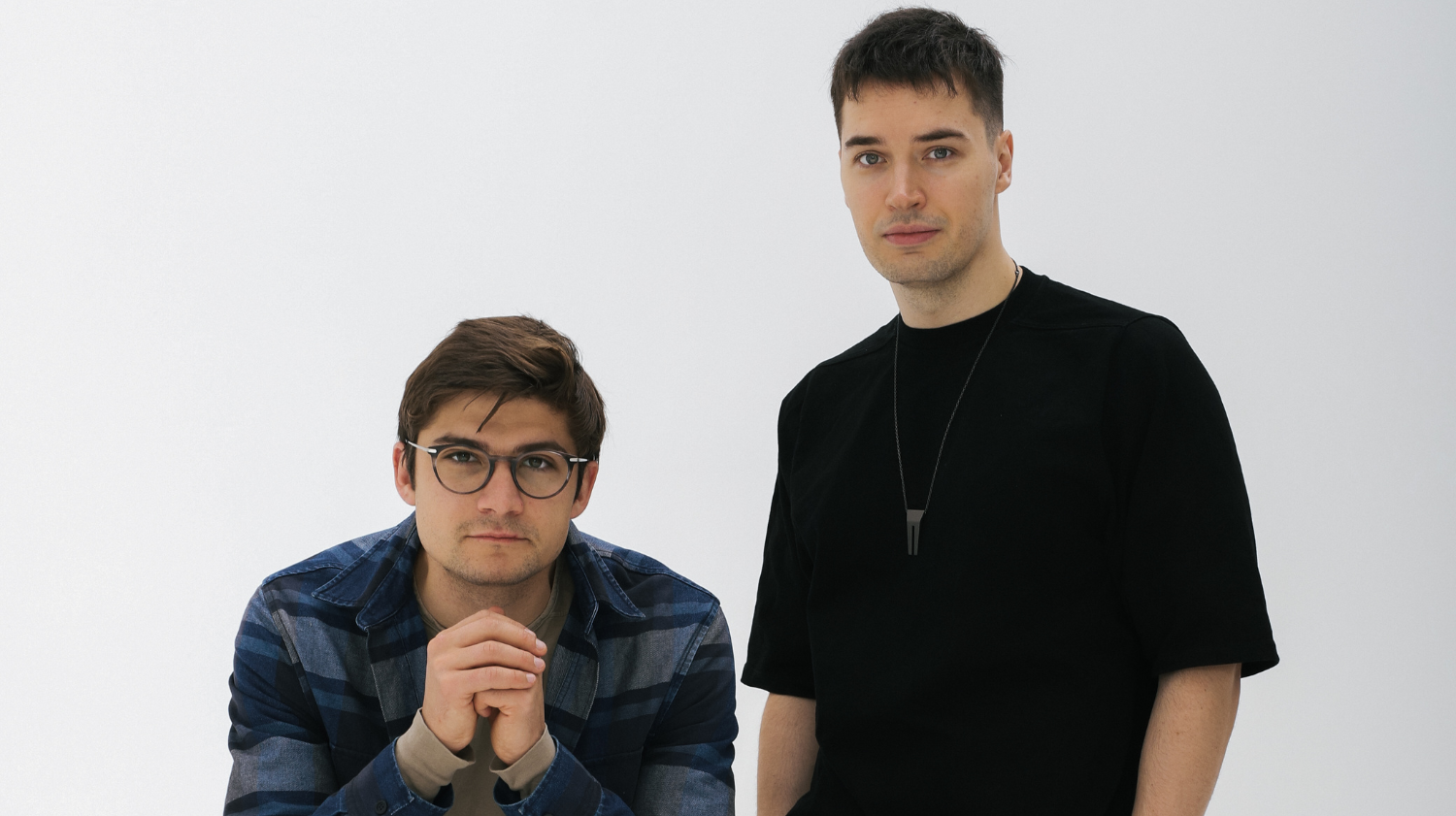
Gracia began after co-founder and CTO Andrey Volodin, formerly an early team member at Prisma, shared a technical demo online. The clip went viral within hours, and creators flooded him with requests for tools that didn’t yet exist.
Volodin and co-founder Georgii Vysotskii initially imagined a volumetric video platform—something like “YouTube for 4D video.” But after speaking with creators, they discovered the real bottleneck wasn’t distribution. It was production: no one had the tools to actually generate high-quality 4DGS content.
That insight set the company on its current path.
The First End-to-End 4DGS Production System
Gracia now operates the world’s first scalable infrastructure for capturing, processing, editing, and deploying 4DGS volumetric video.
The system combines cloud-accelerated processing with a full editing suite: timelines, camera rigs, scene controls, and reconstruction tools.
Plugins for Unity and Unreal support developers directly, while WebGPU-based 2D playback allows 4DGS viewing on Mac and in the browser.
Standalone VR playback is supported on Quest 3 / 3S and Pico 4 Ultra, with all other headsets available via PCVR.
With file sizes around 1GB per minute and smooth real-time playback across devices, Gracia brings Gaussian Splatting out of the lab and into everyday production environments.
Advancing 4DGS Quality for High-Speed Motion
Gracia continues to push technical boundaries.
Earlier 4DGS models struggled with fast movement, often producing artifacts or requiring huge numbers of Gaussians. Gracia’s latest breakthroughs now allow footage captured at 50fps to be played back in high-quality slow motion with minimal artifacts—unlocking performance levels suitable for film, sports, and premium content.
Adoption Across Tech, Film, and Entertainment
Despite its youth, Gracia AI is already gaining traction across Big Tech, major film studios, and entertainment brands.
Its 4DGS system is being tested in next-generation VFX pipelines, used for creative R&D at global technology companies, and recently powered the first 4DGS runway experience for Karl Kani.
Gracia’s volumetric engine is also behind immersive attractions at PortAventura, one of Europe’s largest theme parks.
Industry experts are taking notice.
“The quality Gracia delivers in VR is unmatched,” said Tipatat Chennavasin, General Partner at The Venture Reality Fund.
With more than 50 million XR headsets already shipped—and nearly 100 million expected by mid-decade—demand for photorealistic 3D and 4D content is accelerating. Studios lack the infrastructure to produce it at scale, and Gracia aims to fill that gap.
A More Efficient Production Pipeline
Gracia’s technology generates significant cost advantages for studios:
- Avoiding reshoots saves $50,000–$100,000 per production day
- Virtual sets cut $30,000–$70,000 in location expenses
- Eliminating robotic camera rigs saves up to $15,000 per shot
- 4DGS reduces character-related post-production costs by 30–50%
About Gracia AI
Gracia AI builds the first end-to-end production infrastructure for 4D Gaussian Splatting, enabling studios and creators to generate photorealistic volumetric video for XR, VFX, film, gaming, and beyond. The company provides cloud processing, editing tools, real-time playback systems, and developer integrations that make 4DGS production scalable for the first time.
