
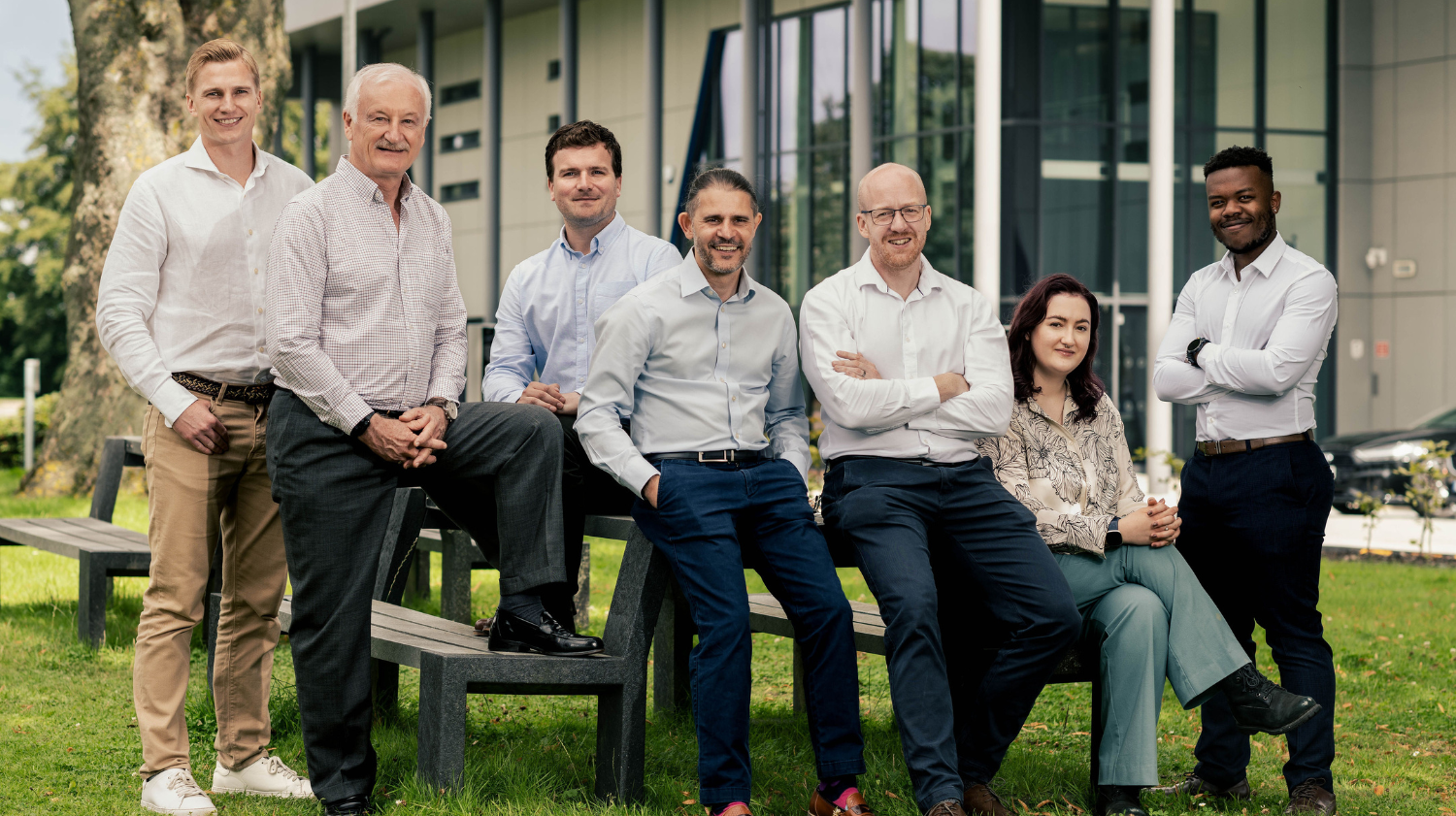
DEScycle has been selected to take part in the Tech Metal Transformation Challenge run by SPRIND, Germany’s Federal Agency for Disruptive Innovation.
The programme will provide an initial €1.5 million in funding to accelerate the development of DEScycle’s circular metals technology, with the potential to access up to €6 million in total support as milestones are achieved.
The SPRIND challenge supports a limited number of projects considered capable of reshaping how critical and precious metals are recovered, refined, and supplied at industrial scale. DEScycle’s inclusion reflects the strategic relevance of its approach to Europe’s priorities around raw material security, industrial resilience, and circular supply chains.
From research to industrial deployment
Unlike traditional grant programmes, SPRIND’s model is structured around staged, multi-year progress toward real-world deployment. Funding is tied to technical and commercial validation rather than incremental research outputs, with a clear emphasis on scaling technologies that can form the basis of new industrial infrastructure.
DEScycle’s platform focuses on recovering high-value and critical metals from complex secondary feedstocks using a fundamentally different process architecture from conventional smelting and refining. By shortening value chains and enabling decentralised, onshore recovery, the company aims to reduce dependence on long, geopolitically exposed supply routes.
As part of the challenge, DEScycle will collaborate with Seloxium, the University of Nottingham, and Esy Labs, bringing together industrial, academic, and applied research expertise across the UK and Germany.
Addressing critical raw material constraints
Demand for metals such as copper, gold, and rare elements embedded in electronic waste continues to rise, while supply remains constrained and increasingly concentrated geographically. At the same time, global e-waste volumes are growing rapidly.
SPRIND’s Tech Metal Transformation Challenge is designed to accelerate technologies that can recover these materials efficiently and safely. DEScycle’s low-temperature deep eutectic solvent approach aims to reduce energy use and environmental impact compared to traditional high-heat processes, while fitting into modular processing systems envisioned by the programme.
Strengthening Europe’s metals supply chains
Participation in the challenge places DEScycle within a broader European effort to develop more secure, circular, and domestic sources of critical materials. The programme will support the company as it moves from demonstration toward deeper industrial validation, with the goal of commercial deployment alongside partners across Europe and beyond.
Dr Rob Harris, CTO of DEScycle, notes that SPRIND’s backing reflects confidence in technologies capable of delivering step-change improvements rather than marginal gains, positioning the company to help redefine how critical metals are supplied at scale.
About DEScycle
DEScycle is a UK-based clean technology company developing a circular metallurgy platform for the efficient recovery of critical and strategic metals from end-of-life products and complex industrial waste. By combining green chemistry with advanced separation and process innovation, the company replaces high-temperature, carbon-intensive recovery methods with a closed-loop, chemistry-driven alternative designed to make metal recycling scalable, competitive, and truly circular.
