
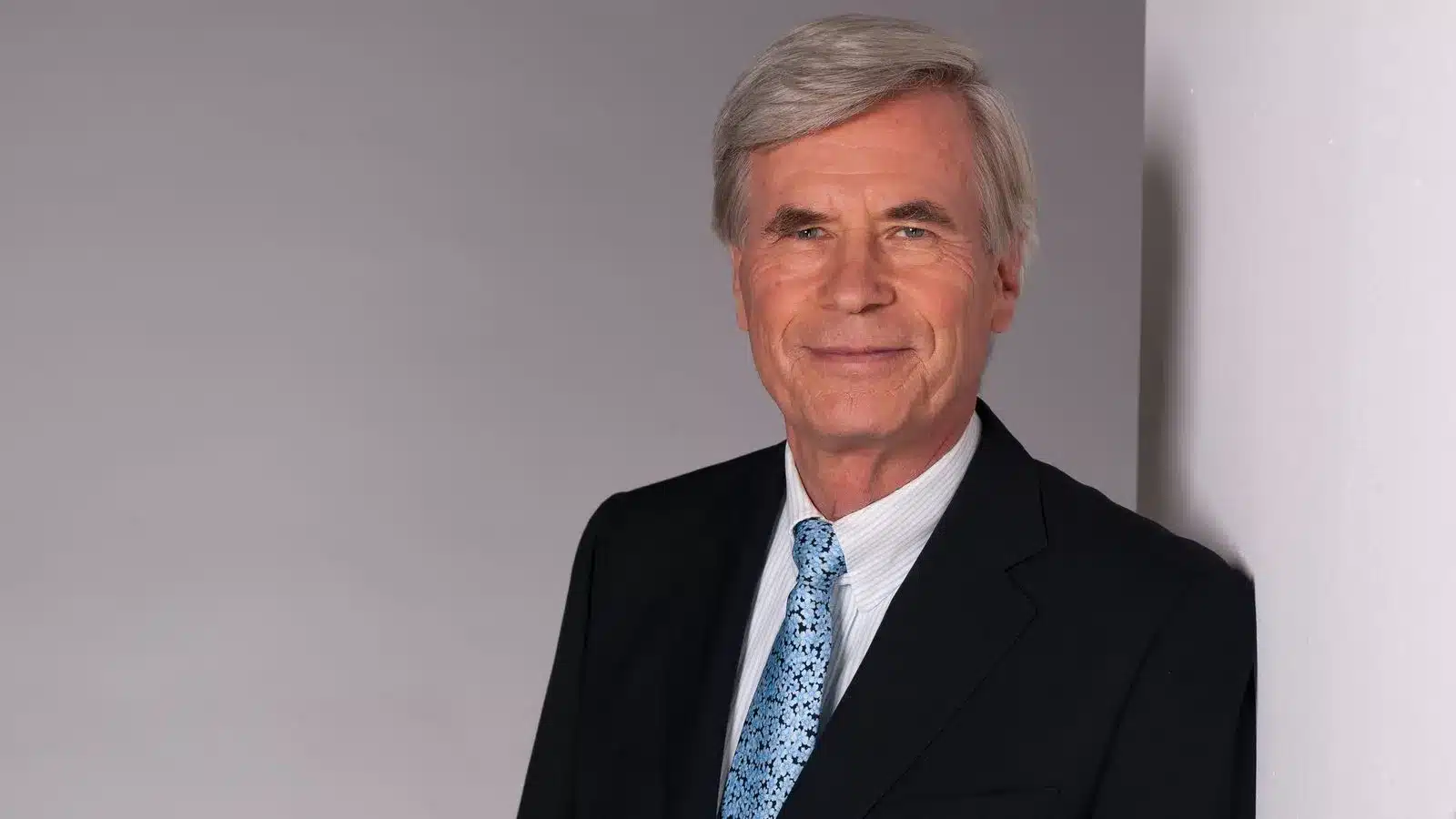
In an era where founders build personal brands as aggressively as their companies, Dieter Schwarz chose a completely different path. No interviews. No keynote speeches. Almost no public appearances. And yet, from behind the scenes, he built one of the largest retail empires in the world.
The founder of Lidl and Kaufland transformed a regional family wholesale business into the Schwarz Group, a global retail powerhouse with hundreds of billions in annual revenue and hundreds of thousands of employees.
His story is not one of loud ambition. It is a story about discipline, operational excellence, relentless long-term thinking, and the extraordinary power of staying focused while the world looks elsewhere.
From a Family Wholesale Business to a Global Vision
Born in Heilbronn, Germany, in 1939, Schwarz grew up around commerce. His father, Josef Schwarz, had helped build a wholesale food company that would later become the foundation for something much larger.
But Dieter Schwarz did not simply inherit a successful company—he reinvented it.
In the early 1970s, inspired by the rise of discount retail models, he opened the first Lidl store in Ludwigshafen. Even the company’s name reflects his pragmatic mindset. Schwarz reportedly purchased the rights to the name “Lidl” from a retired teacher for 1,000 Deutsche Mark because using his own surname could have unintentionally created the German expression “Schwarzmarkt,” meaning black market.
It was a small decision, but symbolic of the way he operated: practical, detail-oriented, and always thinking several steps ahead.

Building an Empire Through Simplicity
While many retailers expanded through complexity and endless product assortments, Dieter Schwarz focused on simplicity and efficiency. Lidl became synonymous with streamlined operations, disciplined pricing, and operational precision.
The strategy worked.
Over the decades, Lidl expanded aggressively across Europe and later internationally, growing into one of the largest discount retail chains in the world with thousands of stores across dozens of countries.
At the same time, Schwarz developed Kaufland into a dominant hypermarket brand, particularly across Central and Eastern Europe.
But what truly separated Schwarz from many entrepreneurs was not rapid expansion alone—it was the ability to scale while maintaining operational discipline. The Schwarz Group became known for execution rather than spectacle.
The Billionaire Nobody Sees
Despite becoming Germany’s richest person for several years, Dieter Schwarz remained almost entirely absent from public life. Very few photographs of him exist, and he has consistently refused interviews and media exposure.
In today’s culture of constant visibility, that level of privacy feels almost radical.
Yet this invisibility became part of his leadership philosophy. Schwarz focused attention on the business rather than himself. Internally, the culture emphasized performance, efficiency, and responsibility—not founder mythology.
His leadership style demonstrated that influence does not require celebrity status. Some leaders dominate headlines. Others dominate industries.
Thinking Beyond Retail
One of the most remarkable aspects of Schwarz’s legacy is that he never viewed retail as the final destination.
Over time, the Schwarz Group evolved far beyond supermarkets. It expanded into recycling, production, cybersecurity, cloud computing, and digital infrastructure. Today, Schwarz-backed initiatives are positioning themselves as European alternatives to dominant American cloud providers, emphasizing digital sovereignty and data control.
This evolution reveals an important leadership principle: great leaders continuously adapt before markets force them to.
Schwarz understood that scale alone is never enough. Relevance requires reinvention.
Creating Impact Beyond Business
In 1999, Dieter Schwarz transferred major ownership stakes into the Dieter Schwarz Foundation, which focuses heavily on education, entrepreneurship, science, and research.
His investments transformed Heilbronn into one of Germany’s emerging innovation and education hubs. Universities, AI initiatives, research institutions, and startup ecosystems have all benefited from the foundation’s long-term vision.
Rather than using wealth for visibility, Schwarz used it to build infrastructure for future generations.
The Leadership Lesson Behind Lidl’s Success
Dieter Schwarz’s story is a reminder that leadership is not always loud.
Sometimes leadership means:
- staying disciplined while others chase hype,
- focusing on systems instead of personal fame,
- thinking in decades instead of quarters,
- and building organizations strong enough to outgrow the founder’s public identity.
From a family wholesaler in Germany to one of the most powerful retail ecosystems on the planet, Schwarz built his empire quietly—but with extraordinary precision.
And perhaps that is what makes his story so inspiring.
In a world obsessed with visibility, Dieter Schwarz proved that sometimes the strongest leaders are the ones who let their work speak louder than they ever do themselves.
