
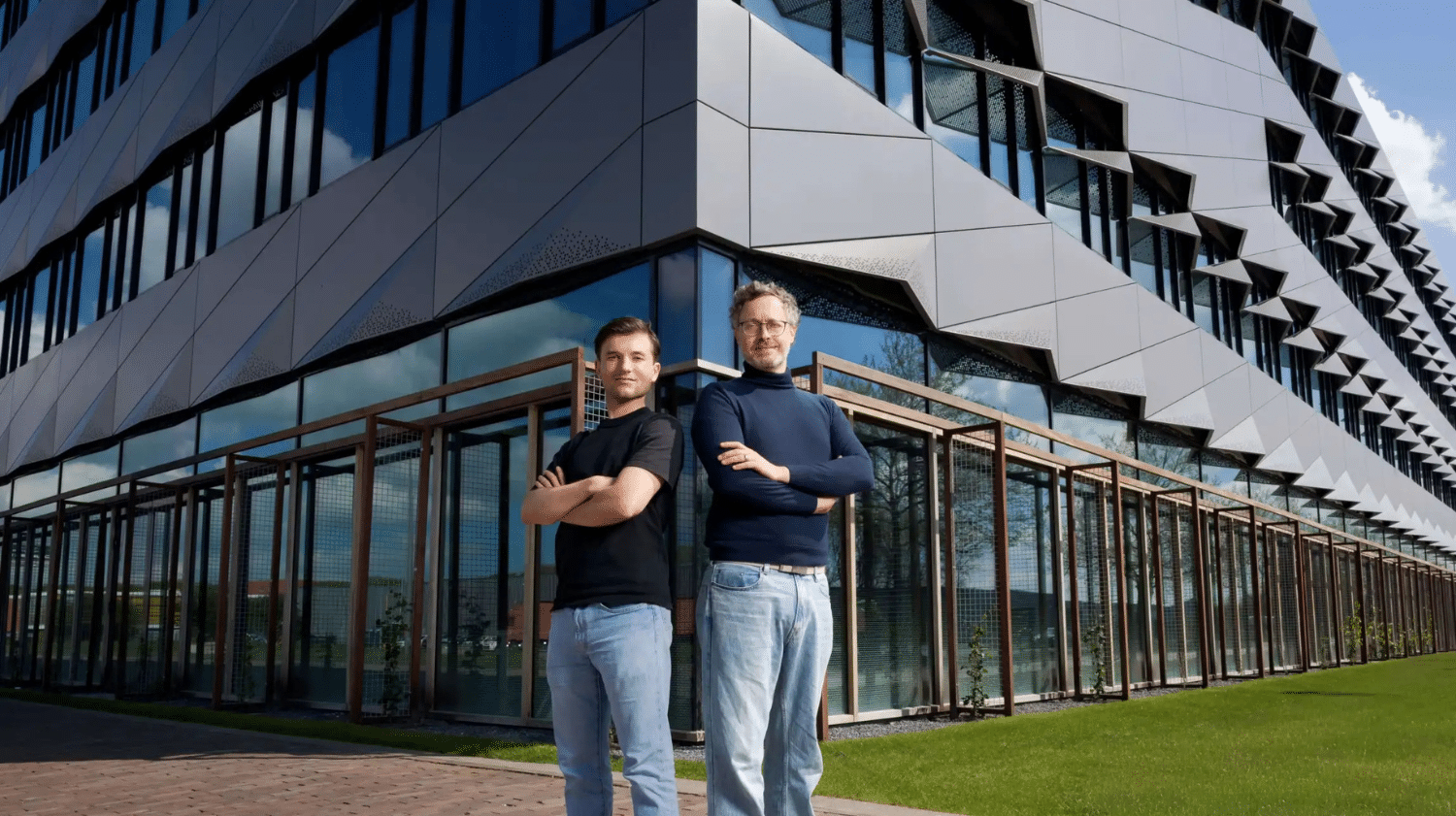
QuantWare, a quantum hardware company, has raised €152 million ($178 million) in a Series B funding round following the launch of its VIO-40K processor architecture.
The system is designed to support up to 10,000 qubits, representing a step-change in scale compared to current quantum computing systems. The round included Intel Capital, IQT, and ETF Partners, alongside existing investors such as FORWARD.one, Invest-NL Deep Tech Fund, InnovationQuarter Capital, Ground State Ventures, and Graduate Ventures. It is described as the largest private funding round to date for a dedicated quantum processor company.
What The Company Does
Founded in 2021 as a spinout from QuTech at TU Delft, QuantWare develops superconducting quantum processors designed to scale toward utility-level quantum computing. The company builds, fabricates, and integrates quantum processing units (QPUs) using its proprietary VIO architecture, which is designed as a modular and open system.
VIO enables the development of large-scale quantum processors through a chiplet-based approach, allowing third parties to design and scale their own components on top of QuantWare’s architecture. The goal is to increase compute density while improving system efficiency and enabling broader ecosystem participation in quantum hardware development.
In addition to hardware, the company provides foundry services and chiplet packaging, supporting external organisations in building and scaling quantum systems on its platform.

Market Context / Industry Background
Quantum computing is moving from experimental systems toward early-stage industrialisation, with increasing focus on scalability, error reduction, and manufacturability. One of the main technical bottlenecks in the sector remains the ability to reliably scale qubit counts while maintaining stability and performance.
Industry approaches are diverging between closed, vertically integrated systems and more open, modular architectures that allow external contributors to design components. Open platforms are increasingly viewed as a potential way to accelerate innovation and expand the ecosystem, particularly as hardware complexity grows.
Demand for quantum computing is also being driven by long-term use cases in fields such as materials science, cryptography, optimisation, and complex simulation, where classical computing systems face fundamental limitations.
At the same time, significant investment is flowing into both hardware development and quantum software tooling, as companies seek to bridge the gap between theoretical breakthroughs and commercially viable applications. This includes advances in cryogenic engineering, control systems, and algorithm design tailored specifically for noisy intermediate-scale quantum devices today globally.
Founder / Investor Commentary
Chief executive and co-founder Matt Rijlaarsdam said that the potential of quantum computing depends on the ability to manufacture and deploy systems at scale. He noted that the company is building both the processor architecture and the industrial capacity required to support large-scale production.
He added that the VIO-40K architecture is designed to enable 10,000-qubit systems on an open platform that the wider ecosystem can build upon, while the company’s manufacturing expansion will support rising global demand.
Growth Plans / Use Of Funds
The new capital will be used to scale QuantWare’s processor development, expand its production capabilities, and advance its VIO-based architecture toward higher qubit counts. A key part of this strategy is the development of KiloFab, a dedicated fabrication facility designed to increase production capacity significantly and support industrial-scale quantum hardware manufacturing.
The company also plans to continue expanding its customer base, which already spans more than 50 organisations across 20 countries, and to strengthen its position as a supplier of quantum processors and enabling infrastructure for the wider ecosystem.
About QuantWare
QuantWare is a quantum processor company based in Delft, Netherlands. Founded in 2021 as a spinout from QuTech at TU Delft, the company develops superconducting quantum hardware using its open VIO architecture, providing processors, fabrication services, and packaging solutions to support the global transition toward scalable quantum computing.
