
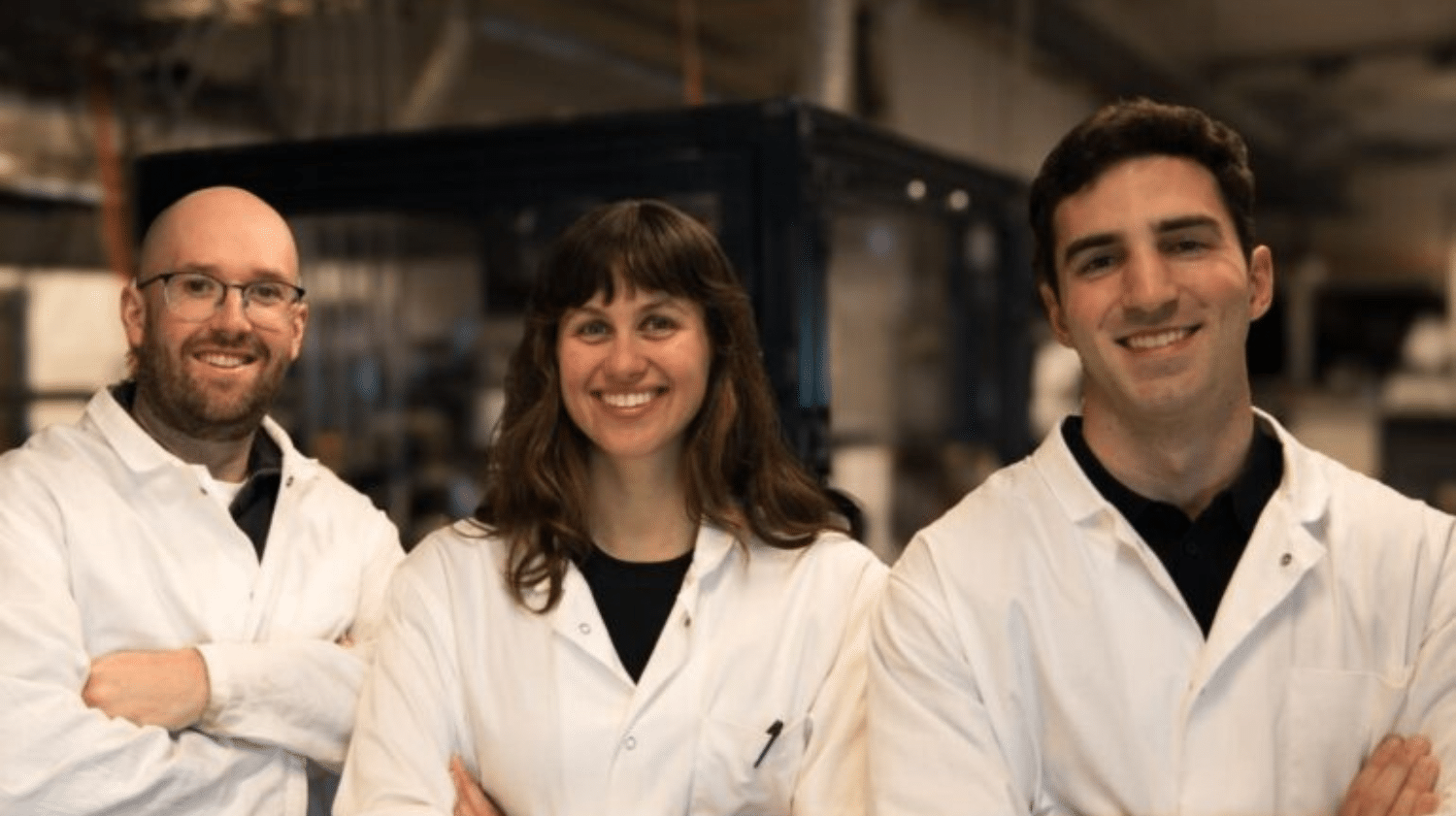
Carbonyx, a cleantech startup, has raised $1.2 million in pre-seed funding to develop technology that converts industrial waste into usable materials while capturing carbon.
The round was led by WUTIF Capital, with participation from Spring Impact Capital, UBC Venture Funds, and several angel investors. The company is emerging from academic research at the University of British Columbia and aims to make carbon capture economically viable through material recovery.
What The Company Does
Carbonyx develops a system that processes waste rock from mining, construction, and manufacturing operations to extract valuable industrial materials while also capturing CO2.
Its core technology accelerates the natural carbon-capturing properties of certain minerals by using a combination of electricity and water to trigger chemical reactions. This process enables the transformation of waste material into commercially useful outputs such as carbonates, which have applications in multiple industrial sectors, and silica, which is widely used in products ranging from tires to personal care items.
The company positions itself as both a carbon removal solution and a materials producer, with revenue generated not only from carbon sequestration but also from the sale of recovered industrial inputs.

Market Context / Industry Background
Carbon capture technologies have struggled to scale due to heavy reliance on carbon credit markets, which remain volatile and dependent on corporate purchasing behavior. Recent shifts, including large buyers reassessing or pausing credit purchases, have further highlighted the fragility of this model.
At the same time, industrial sectors continue to generate large volumes of mineral waste that are often underutilized. This creates an opportunity for technologies that can combine emissions reduction with material recovery.
Carbonyx’s approach reflects a broader trend in climate tech toward solutions that generate direct economic value rather than relying solely on offset markets. By tying carbon removal to the production of sellable materials, companies aim to create more resilient business models.
Founder / Investor Commentary
Doug Pimlott, co-founder and CEO of Carbonyx, said the company’s work began as academic research but evolved into a commercial opportunity once the team identified the potential for both carbon capture and material recovery.
He noted that traditional carbon removal approaches are not scaling quickly enough due to dependence on carbon credit demand, which he described as unstable in the current market environment. He argued that viable carbon capture solutions must generate value beyond credits in order to succeed.
Pimlott described Carbonyx as fundamentally a carbon removal company that operates through a materials business model, combining environmental impact with industrial output.
WUTIF Capital COO Aaron Stuart highlighted the dual nature of the technology, pointing to its ability to remove CO2 while producing profitable byproducts, particularly in a carbon market that remains uncertain.
Growth Plans / Use Of Funds
The funding will be used to expand Carbonyx’s technical team and build a demonstration-scale system roughly the size of a shipping container. This prototype is expected to significantly increase production capacity from kilogram-scale outputs to multi-tonne volumes.
Over the next few years, the company aims to reach commercial-scale deployment within two to three years, with a longer-term goal of achieving megatonne-level carbon removal capacity within a decade.
Carbonyx also plans to expand its material output beyond carbonates and silica, exploring opportunities in critical minerals and rare earth elements as part of its broader industrial strategy.
About Carbonyx
Carbonyx is a cleantech startup based in Vancouver developing technology that converts industrial waste into valuable materials while capturing carbon dioxide. Spun out of research at the University of British Columbia, the company focuses on combining carbon removal with industrial material recovery to create economically viable climate solutions that reduce reliance on carbon credit markets.
