
Most people don’t think about light. It’s simply there — illuminating screens, offices, homes. It helps us work longer, stay connected, and operate in a world that never really turns off.
But beneath that convenience lies a silent contradiction: while technology has optimized light for productivity, it has largely ignored its impact on human biology.
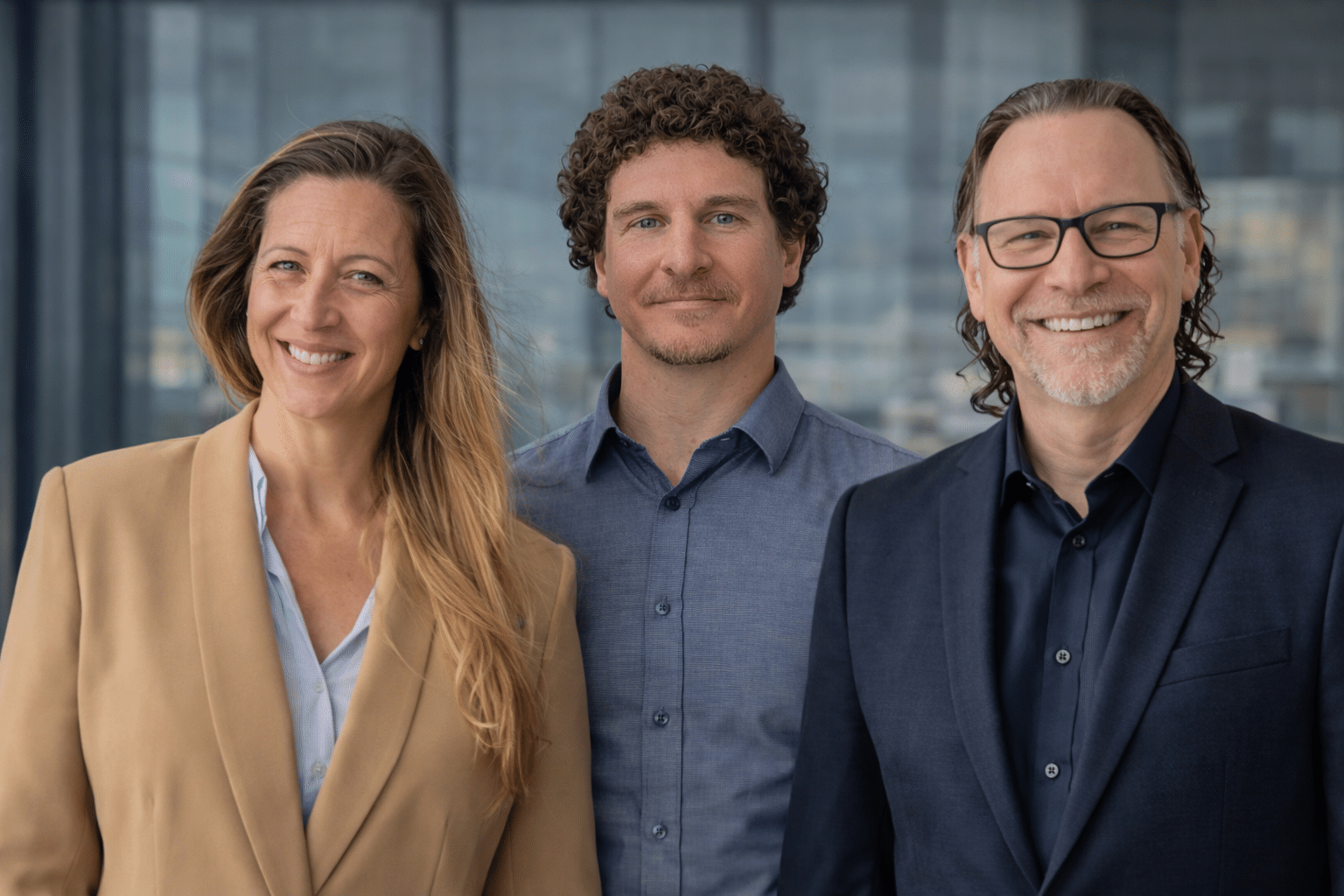
For the founders of Pixun Technologies, that realization didn’t come from theory. It came from experience.
When Light Becomes the Problem
For Peter Veto, the journey began with something deeply personal. He struggled with light sensitivity and digital eye strain — symptoms that are increasingly common, yet rarely understood.
The turning point came not from a lab, but from everyday observation. By improving his light environment and increasing exposure to natural sunlight, many of his symptoms simply disappeared.
That sparked a deeper question: if something as fundamental as light could have such a dramatic effect, why wasn’t it better understood — or better designed?
As Peter began speaking with others, including highly light-sensitive individuals and organizations, a pattern emerged. The problem wasn’t isolated. It was systemic. And more importantly, it was largely misunderstood.
Even within scientific communities, answers were limited.
Despite working in leading vision science environments, Peter found that few could explain what he was experiencing. That gap between research and real-world application became impossible to ignore.
A Missing Link Between Science and Reality
At the same time, Liliana Lettieri was building a career that naturally bridged disciplines.
With a PhD in biology and a background that integrated engineering, chemistry, color science, and modeling, she had spent years solving complex problems from multiple angles. Her work evolved into leading multidisciplinary teams, translating scientific insights into tangible products.
Yet entrepreneurship was never part of the original plan.
That changed when personal health challenges began to surface — particularly those linked to circadian disruption. Like Peter, she experienced firsthand how reintroducing natural light into daily life could dramatically improve well-being.
When the two met, the connection was immediate. Peter had the concept. Liliana saw the potential.
“I felt it in my bones,” she recalls. “This needed to exist.”
The Moment That Sparked a New Category
The idea behind Pixun Technologies crystallized in a surprisingly simple moment.
After a full day working in a dark lab, Peter sat in front of a window, finally exposed to sunlight. But as he tried to continue working, the sun — positioned directly behind his screen — became an obstacle.
To see his display, he had to block the light. That contradiction captured the entire problem in a single instant: modern work environments force us to choose between productivity and biology.
What if that trade-off didn’t have to exist?
What if you could work — and still receive the full benefits of natural daylight?
That question became the foundation of Pixun.
The Hidden Cost of Artificial Light
At first glance, modern displays seem advanced. Higher resolution, better color accuracy, brighter outputs. But these improvements focus almost entirely on visual performance — not biological impact. And that’s where the real problem lies.
Most people today experience some level of digital eye strain. For some, it becomes debilitating. But the visible symptoms are only part of the story. Artificial light fundamentally differs from natural daylight in ways that extend far beyond what the eye can perceive. While we can “see” perfectly well under electric lighting, the deeper physiological effects tell a different story.
Human biology evolved under a dynamic, full-spectrum light environment — one that changes throughout the day, signaling when to wake, when to rest, and how to regulate countless internal processes. Modern lighting systems, by contrast, are static, narrow in spectrum, and disconnected from natural cycles.
“We’ve engineered ourselves into dysregulation,” Liliana explains. “Light is not just something we see. It’s information. It’s a signal that coordinates the entire body.”
From Fixing Light to Redesigning It
Most existing solutions attempt to fix artificial light — reducing blue light, adding filters, or slightly modifying LED behavior.
Pixun Technologies takes a fundamentally different approach. Instead of starting with a flawed source and trying to improve it, the company begins with what is already optimal: daylight.
The challenge then becomes how to bring that natural light into indoor environments — not just as illumination, but as a functional part of technology. This requires rethinking everything from display architecture to how light is collected, transmitted, and integrated into everyday setups. The result is not an incremental improvement, but a shift in paradigm. Rather than mitigating harm, Pixun Technologies aims to eliminate the root cause.
Translating Science into Human Experience
One of the biggest challenges in building Pixun Technologies isn’t just technical — it’s conceptual. The science behind light is complex, spanning biology, physics, and neuroscience. But the user experience needs to feel intuitive.
Here, the founders rely on something simple: human instinct.
People already know, on some level, that daylight feels better. That it improves mood, energy, and focus. The problem is not awareness — it’s accessibility. To explain it, Liliana often uses a nutritional analogy.
“Think of light as part of your daily diet,” she says. “Artificial light is like processed food. It might keep you going, but it’s not complete. Your body needs the full spectrum to function properly.”
Pixun’s mission is to restore that balance — not by adding complexity, but by reconnecting people with something they’ve always needed.
Building at the Edge of Disciplines
Creating this kind of product requires more than engineering. It requires coordination across multiple domains — science, hardware, design, and human behavior. For Liliana, leading such a team feels like solving a constantly evolving puzzle.
“You have a clear vision, but the path is dynamic,” she explains. “You need to listen, adapt, and integrate different perspectives — while staying focused on execution.”
That balance between flexibility and determination defines how Pixun operates.
A Future Built Around Human-Centric Technology
Looking ahead, the ambition goes far beyond a single product. Pixun Technologies represents a broader shift — one where technology is no longer designed purely for performance, but for human well-being. The founders envision a future where light environments are personalized, adaptive, and integrated with emerging technologies like AI.
A future where interacting with technology no longer comes at a biological cost.
“We can build systems that support people instead of draining them,” Liliana says.
Redefining the Standard
At its core, Pixun Technologies is not just about light. It’s about rethinking the relationship between humans and the environments we create. In a world that has prioritized efficiency over physiology, the company is making a bold argument: the two don’t have to be in conflict.
And if they’re right, the way we design technology — from screens to spaces — may never look the same again.
