
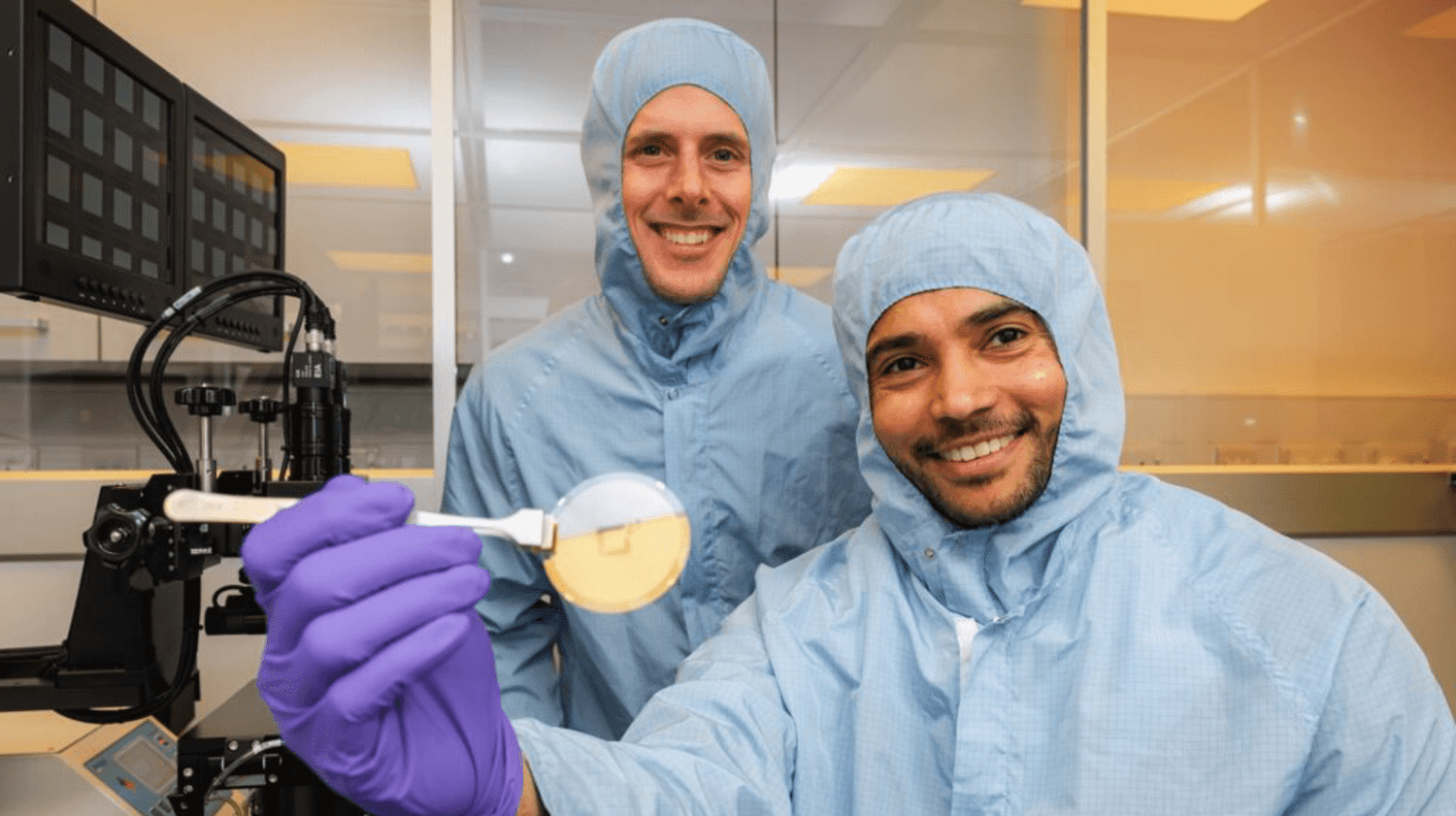
Semarion, a University of Cambridge spin-out originating from the Cavendish Laboratory, has raised $3.8 million (£2.9 million) to advance its cell assay technology and support broader adoption across the pharmaceutical industry.
The round was led by Parkwalk, with participation from The FSE Group, Cambridge Enterprise Ventures, Oxford Innovation Finance, Found Capital, Cambridge Capital Group, and Start Codon. The funding will be used to scale manufacturing and accelerate the commercial rollout of its SemaCyte® platform.
What The Company Does
Semarion develops tools designed to improve the efficiency and scalability of cell-based drug discovery. Its core technology, SemaCyte®, transforms adherent cell models into assay-ready, barcoded reagents that can be integrated into existing laboratory workflows.
By combining materials engineering, microfabrication, and cell biology, the platform enables researchers to generate higher volumes of data while maintaining compatibility with standard laboratory infrastructure. This approach addresses limitations in traditional cell assays, which can be resource-intensive and difficult to scale.
The use of barcoded reagents allows for more flexible experimental design and improved data tracking, supporting more efficient screening processes in early-stage drug development.

Market Context / Industry Background
Pharmaceutical research is increasingly reliant on cell-based assays to generate data for drug discovery and development. As pipelines expand and timelines shorten, there is growing pressure on research teams to improve throughput, automation, and data quality.
Traditional assay methods often struggle to meet these demands due to constraints in scalability and integration with automated systems. This has created demand for technologies that can enhance productivity without requiring significant changes to existing laboratory infrastructure.
Platforms like SemaCyte® are part of a broader shift toward more modular and data-driven approaches in life sciences, where interoperability and automation are becoming central to research efficiency.
Founder / Investor Commentary
Jeroen Verheyen, CEO and co-founder of Semarion, described the funding as a step toward meeting increasing industry demand, noting that researchers are under pressure to generate more cell-based data while improving operational efficiency. He stated that the company’s technology enables scientists to achieve this within existing workflows, adding that the focus is now on expanding adoption across the sector.
Growth Plans / Use Of Funds
The company will use the new funding to scale manufacturing capacity and accelerate the commercialisation of its platform. This includes expanding its field application support team and strengthening partnerships with pharmaceutical companies and technology providers.
Semarion has already established collaborations with global pharmaceutical firms, including several top-tier companies in the United States and Europe, with pilot programmes progressing toward wider deployment.
In addition, partnerships with life sciences tools providers such as Revvity and SPT Labtech are supporting integration with imaging, analysis, and automated liquid handling systems, enabling more streamlined cell-based workflows.
About Semarion
Semarion is a biotechnology company developing advanced tools for cell-based drug discovery. Founded as a spin-out from the University of Cambridge. Headquartered in Cambridge. Its SemaCyte® platform enables scalable, high-throughput assays by converting adherent cells into barcoded, assay-ready reagents for research applications.
