
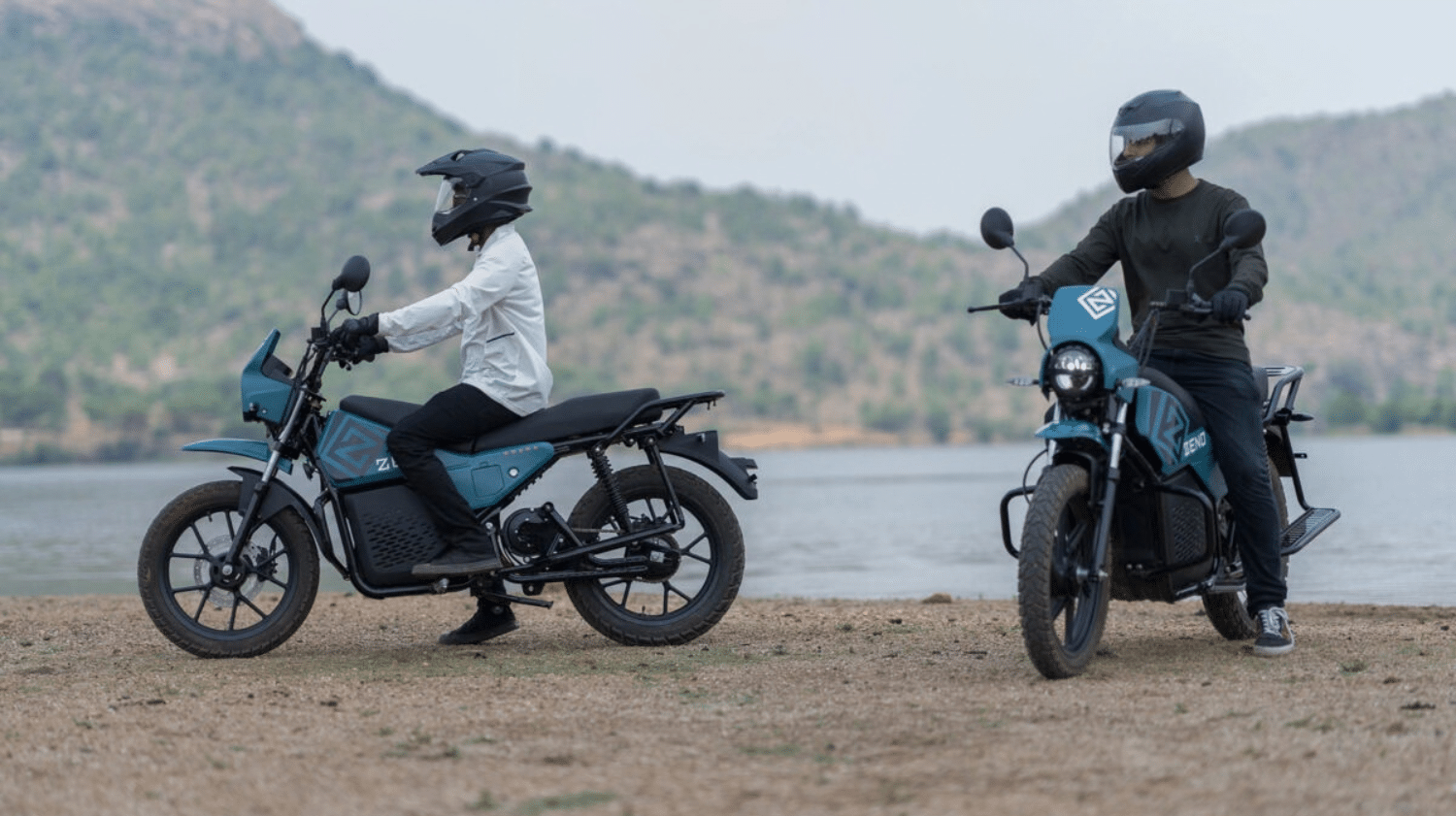
Electric mobility startup Zeno has raised $25 million in a Series A funding round to scale production of its battery-swappable electric motorcycles and expand its charging infrastructure across East Africa.
The round includes $20.5 million in equity led by Congruent Ventures, with participation from Active Impact and Lowercarbon Capital, alongside a $4.5 million debt facility provided by Camber Road and Trifecta Capital. The funding will support manufacturing growth and network expansion as demand for electric two-wheel transport rises across the region.
What The Company Does
Zeno develops electric motorcycles designed specifically for commercial transport markets in East Africa, where motorbikes play a central role in daily mobility and logistics. The company’s flagship model, the Emara, is built for both passenger and cargo transportation and integrates with a battery-swapping and charging network.
The motorcycle offers approximately 100 kilometers of range on a single charge and can carry loads of up to 250 kilograms. Its electric drivetrain provides peak power of around 8 kilowatts, comparable to a 150cc internal combustion engine. Because electric motors deliver full torque from a standstill, the bike can climb steep roads even when carrying passengers or goods, a key requirement for the region’s bodaboda motorcycle taxi operators.
Zeno sells the Emara motorcycle for around $1,300 without a battery or approximately $2,000 with a battery included. Customers who choose not to purchase a battery can instead subscribe to a monthly or usage-based battery plan and swap depleted batteries at charging stations.
The company also offers mobile app integration that allows riders to locate swap stations and manage battery subscriptions.

Market Context / Industry Background
Motorcycles are a primary form of transportation across many East African cities, where they are widely used for passenger transport, deliveries, and small-scale logistics services. These vehicles are often operated by independent drivers who depend on low operating costs to maintain profitability.
Electric motorcycles are increasingly being explored as an alternative to traditional gasoline-powered bikes due to their lower maintenance and fuel costs. For commercial riders, the economics can be particularly attractive if charging infrastructure is accessible and vehicle prices remain affordable.
Battery-swapping networks have emerged as one approach to solving charging challenges. Rather than waiting for a battery to recharge, riders can exchange depleted batteries for charged ones at swap stations, minimizing downtime.
Several startups across East Africa are currently developing electric motorbike platforms and infrastructure, competing to capture a share of the region’s growing mobility market.
Founder / Investor Commentary
Zeno co-founder and CEO Michael Spencer said the company’s strategy focuses on reducing the cost of ownership for riders while building a scalable charging infrastructure.
According to Spencer, Zeno aims to offer operating costs roughly 50 percent lower than comparable internal combustion motorcycles. This cost advantage is expected to be a key factor in attracting commercial drivers who rely on motorcycles as their primary source of income.
Spencer previously worked at Tesla and has cited the company’s early strategy of combining electric vehicles with energy infrastructure as an influence on Zeno’s approach.
He noted in earlier discussions that deploying electric mobility systems can face fewer barriers in emerging markets where transportation infrastructure is still evolving.
Growth Plans / Use Of Funds
Zeno plans to use the Series A funding to increase production of its Emara motorcycles and expand its battery-swapping network across additional cities in Kenya and Uganda.
Since emerging from stealth roughly eighteen months ago, the company has produced more than 800 motorcycles and installed more than 150 charging locations across four cities in the two countries. Zeno is currently producing approximately 70 to 80 motorcycles per week.
Demand for the vehicles appears to be growing. The company reports that more than 25,000 potential customers, including both individual riders and fleet operators, are waiting to purchase the Emara motorcycle.
Beyond vehicle production, Zeno is also developing complementary energy products. The company is currently prototyping a battery dock designed to allow households and businesses to use motorcycle batteries to power lights and small appliances. Early versions of the product are already being tested by a small group of customers.
If successfully commercialized, this system could position Zeno not only as a transportation provider but also as a participant in the region’s broader energy ecosystem. In parts of East Africa where grid reliability remains limited, modular battery systems may provide an alternative source of electricity for homes and businesses.
About Zeno
Zeno is an electric mobility company focused on developing battery-swappable electric motorcycles for emerging markets. The company designs and manufactures the Emara electric motorbike and operates a charging and battery-swap network across East Africa. By combining vehicle manufacturing with energy infrastructure, Zeno aims to reduce transportation costs while supporting the transition to electric mobility in regions where motorcycles play a central role in everyday transport.
