
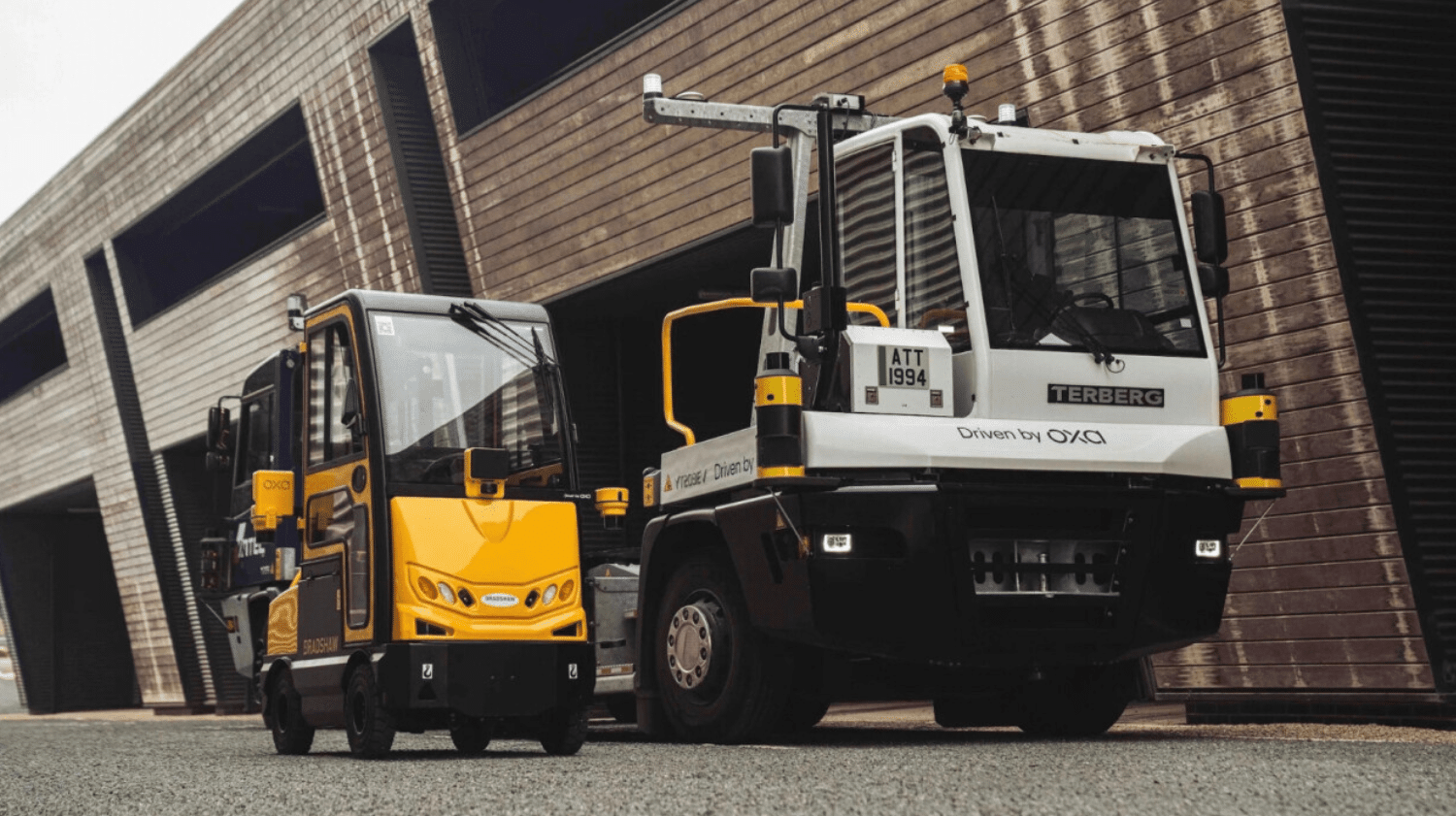
UK autonomous driving company Oxa has raised $103 million in a Series D funding round to accelerate the deployment of self-driving vehicles across industrial environments such as ports, airports, warehouses, and energy facilities.
The round included $50 million from the UK’s National Wealth Fund, alongside participation from NVentures, the venture capital arm of Nvidia, and bp Ventures. The investment brings Oxa’s total funding to more than $250 million and will support broader commercial deployment of its autonomous driving platform.
What The Company Does
Founded in 2014 and headquartered in Oxford, Oxa develops autonomous driving software designed specifically for industrial and logistics environments. The company’s technology enables vehicles to perform repetitive transport and operational tasks without a human driver.
The platform integrates several components including autonomy software, modular hardware systems, and fleet management tools. Together, these elements allow organizations to deploy autonomous vehicles at scale while maintaining operational safety and monitoring performance across fleets.
Unlike many companies focused on consumer-facing autonomous vehicles or robotaxi networks, Oxa concentrates on controlled environments where vehicle routes, infrastructure, and safety conditions can be more precisely managed. This includes industrial sites where vehicles repeatedly move goods, materials, or equipment across predictable routes.
The company also provides the hardware systems needed to enable autonomous operation. According to Oxa, existing vehicles can be retrofitted with its technology relatively quickly, with a heavy-duty port truck able to be converted for driverless operation in less than a day.

Market Context / Industry Background
Interest in industrial automation has grown significantly as logistics, manufacturing, and energy companies look for ways to address labor shortages and increase operational efficiency. Autonomous vehicles designed for controlled environments are increasingly viewed as a practical entry point for large-scale deployment of driverless technology.
Industrial sites such as ports and distribution centers often operate on fixed routes and predictable schedules, making them suitable environments for early adoption of autonomous transport solutions. Compared with consumer road networks, these environments involve fewer unpredictable interactions with pedestrians and public traffic.
As a result, several technology companies and industrial operators have begun investing in autonomous vehicle systems designed specifically for logistics and infrastructure settings. These systems aim to reduce operational costs while increasing safety and reliability in repetitive transport tasks.
Oxa’s strategy focuses on what the company describes as industrial mobile autonomy, prioritizing practical deployment in real-world industrial settings rather than competing directly in the highly complex passenger vehicle autonomy market.
Founder / Investor Commentary
Oxa co-founder Paul Newman highlighted the company’s strategic focus on industrial applications rather than consumer vehicles. He noted that achieving full autonomy for passenger cars remains a complex technical challenge.
“We think trying to do that in the passenger car space is super, super hard,” Newman said. “In the industrial space, it’s extremely clear what you need to do to make a product.”
The company believes that focusing on controlled operational environments allows autonomous systems to deliver measurable value more quickly while avoiding many of the regulatory and technical hurdles associated with public road deployments.
Growth Plans / Use Of Funds
The newly raised capital will be used to expand the deployment of Oxa’s autonomous vehicle technology with existing and new customers. The company is currently working with organizations including DHL, BP, and Vantec to introduce autonomous vehicle operations within their industrial logistics networks.
Funding will also support further development of Oxa’s autonomy software and hardware systems, as well as scaling commercial partnerships across additional sectors such as ports, airports, and large industrial facilities.
Oxa expects to announce additional deployment projects in the near future as demand for industrial automation continues to grow.
The company is also increasing its visibility within the European technology ecosystem. Oxa CEO Gavin Jackson is scheduled to speak at the Tech.eu Summit London 2026, which will take place on 21–22 April at the Queen Elizabeth II Centre.
About Oxa
Oxa develops autonomous vehicle technology designed to automate repetitive driving tasks in industrial environments. Founded in 2014 and headquartered in Oxford, the company provides software and hardware systems that enable driverless vehicle operations in locations such as ports, airports, factories, and energy facilities. Its platform aims to help organizations improve efficiency, address workforce shortages, and reduce operational costs through automation.
