
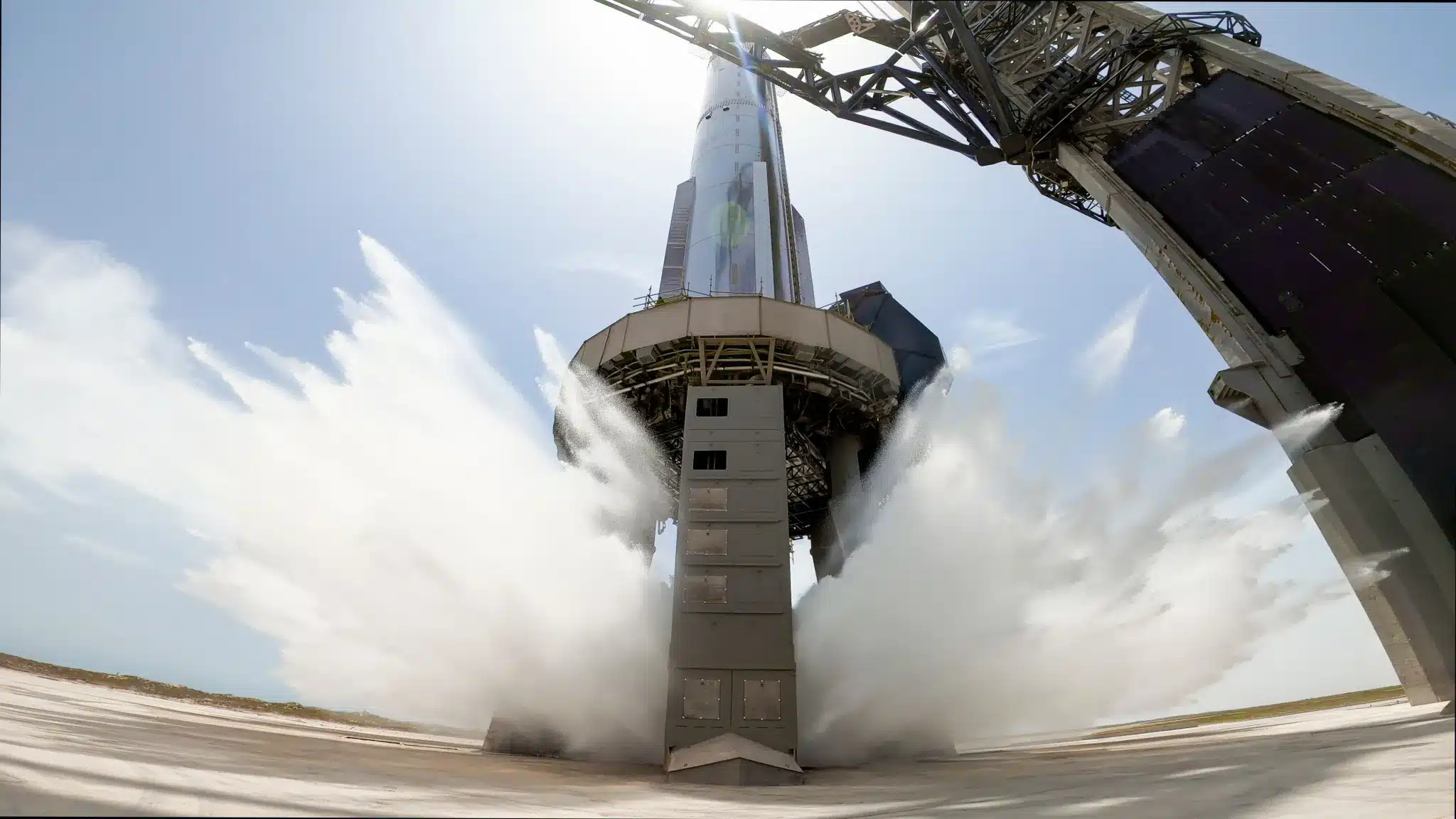
SpaceX has completed the acquisition of Elon Musk’s artificial intelligence startup xAI, bringing the two companies together under a single structure and creating what is now reported to be the world’s most valuable private company.
According to Bloomberg, the transaction values the combined group at around $1.25T. Elon Musk, CEO of SpaceX, confirmed the deal in a memo published on the company’s website, framing the acquisition as a strategic move to enable large-scale data centers in orbit.
Building AI infrastructure beyond Earth
Musk argues that the rapid progress of AI is constrained by the physical limits of terrestrial data centers, which demand enormous amounts of electricity and cooling. In his view, global power grids will struggle to support the next phase of AI growth without significant environmental and social impact.
By shifting compute infrastructure into space, Elon Musk believes these constraints can be reduced, using satellites to host or support data center capabilities beyond Earth’s surface. The acquisition formally integrates xAI into SpaceX’s long-term roadmap.

A reinforcing business loop
Musk indicated that space-based data centers would require a constant deployment of satellites, though he did not specify numbers. This model would further strengthen SpaceX’s launch cadence and long-term revenue stream, especially as satellites must be replaced or de-orbited every few years under current regulatory rules.
Today, a significant share of SpaceX’s revenue already comes from its Starlink satellite network, which relies on frequent launches and ongoing constellation expansion.
Financial pressure and strategic timing
The merger brings together two businesses with very different financial dynamics. xAI is reportedly burning close to $1B per month as it competes with leading AI labs, while SpaceX continues to fund capital-intensive programs such as Starship, lunar missions, and Mars exploration.
Last year, xAI also absorbed X, the social media platform formerly known as Twitter, in a separate deal that Musk said valued the combined entity at $113B. Tesla and SpaceX have each previously invested $2B into xAI, underscoring Musk’s push to tightly align his companies around AI development.
Diverging short-term priorities
Despite the long-term vision, SpaceX and xAI face very different immediate challenges. SpaceX is focused on proving Starship’s readiness for crewed missions to the Moon and Mars, while xAI is racing to establish itself against incumbents such as OpenAI and Google.
That competitive pressure has already sparked controversy, with reports suggesting recent changes to xAI’s chatbot Grok were driven by speed rather than safety considerations.
What comes next
SpaceX has reportedly been preparing for a potential IPO as early as this year, though Musk did not comment on whether the xAI acquisition affects those plans. What is clear is that the deal further concentrates Musk’s AI, space, and infrastructure ambitions into a single, tightly coupled ecosystem.
About SpaceX
SpaceX is a U.S.-based aerospace company developing launch vehicles, spacecraft, and satellite systems. Founded by Elon Musk, the company operates the Starlink satellite network and is working toward reusable rockets and interplanetary spaceflight.
About xAI
xAI is an artificial intelligence company founded by Elon Musk to develop advanced AI systems and large language models. The company focuses on competing with leading AI labs while integrating AI across Musk’s broader technology ecosystem.
