
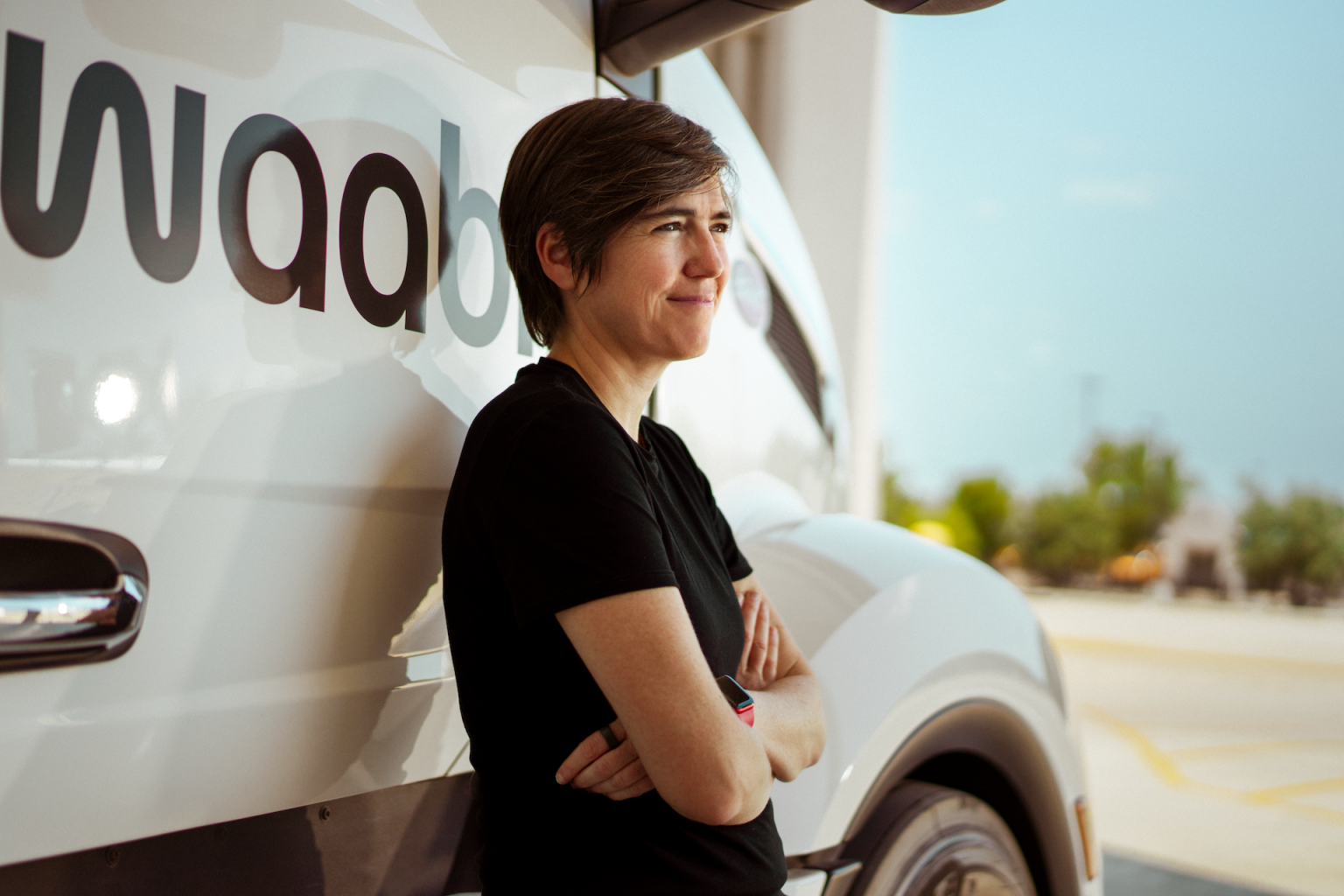
Autonomous driving startup Waabi has raised $1 billion in new funding and announced a strategic partnership with Uber to bring Waabi-powered robotaxis onto the ride-hailing platform, marking its first major step beyond autonomous trucking.
The financing includes an oversubscribed $750M Series C round co-led by Khosla Ventures and G2 Venture Partners, alongside roughly $250M in milestone-based capital from Uber. The Uber investment is tied to plans to deploy at least 25,000 Waabi Driver–powered robotaxis exclusively on Uber’s platform, though no deployment timeline has been disclosed.
A single AI stack across multiple autonomy markets
The expansion into robotaxis reflects its belief that one general-purpose AI system can scale across different autonomous vehicle categories. Unlike earlier self-driving efforts that relied on separate technology stacks for trucking and passenger vehicles, Waabi has built a unified architecture designed to handle multiple vehicle types.
Founder and CEO Raquel Urtasun says this approach allows the company to move faster and more efficiently than competitors that operate siloed programs. The technology has been developed with both trucks and passenger vehicles in mind from the start, making the robotaxi move a natural extension rather than a pivot.

From Uber ATG to a renewed partnership
The partnership also reconnects Urtasun with Uber, where she previously served as chief scientist at Uber ATG before the unit was sold to Aurora Innovation in 2020. The company already works with Uber Freight, and the new agreement deepens collaboration across autonomous mobility.
The firm joins a growing list of autonomous vehicle developers deploying on Uber’s platform, including Waymo, Nuro, Avride, Wayve, WeRide, and Momenta. The announcement coincides with Uber launching Uber AV Labs, a new division focused on supporting autonomy partners with data and infrastructure.
Simulation-first autonomy with Waabi World
The firm differentiates itself through a simulation-driven development model. Its closed-loop system, Waabi World, generates high-fidelity digital twins of real environments, simulates sensors in real time, and stress-tests the Waabi Driver across millions of scenarios.
This approach allows the system to learn and generalize with far less real-world data than traditional autonomous driving programs. According to the company, Waabi Driver can reason about its surroundings in a more human-like way, enabling safer decision-making across diverse environments.
Scaling robotaxis and autonomous trucks in parallel
Over the past four years, the company has focused on highway and surface-street autonomy for trucks, running commercial pilots in Texas with safety drivers. Fully driverless trucking deployments were initially planned earlier but have shifted into the coming quarters as vehicle validation continues.
Waabi is also working with Volvo to produce factory-integrated autonomous trucks, embedding sensors and redundant systems directly at the OEM level. A similar vertically integrated approach is expected for robotaxis, though Waabi has not yet disclosed its passenger vehicle manufacturing partner.
Capital-efficient growth in a crowded AV market
With this round, the total funding reaches roughly $1.28B, following a $200M Series B in 2024. Other investors include Uber, NVentures, Volvo Group Venture Capital, Porsche Automobil Holding SE, BlackRock, and BDC Capital’s Thrive Venture Fund.
As competition intensifies across autonomous mobility, Waabi is positioning itself as a capital-efficient alternative, betting that simulation-first development and a single scalable AI stack can unlock faster, more reliable deployments across trucking, robotaxis, and future robotic applications.
