
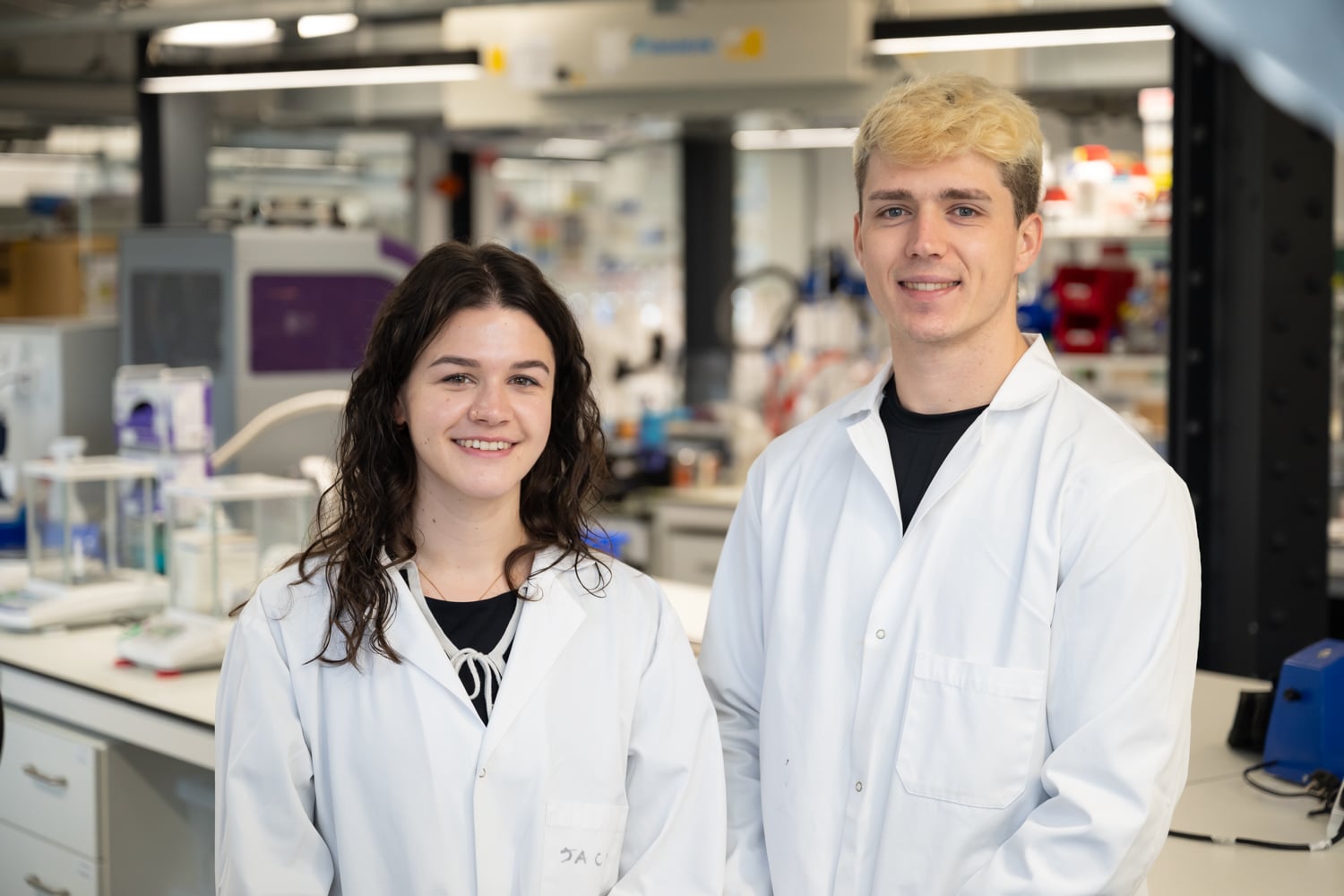
Anzen Industries, a UK-based deeptech startup, has raised $2.2M in a pre-seed funding round led by LocalGlobe and Creator Fund. The round also included strategic angel investors from the UK, EU, and US, including Konstantin von Unger and early-stage investor Cory Levy.
Founded by scientists Amy Locks and Pedro Lovatt Garcia, Anzen Industries is developing a biomanufacturing platform based on cell-free enzyme systems designed to produce high-value chemicals more efficiently and with lower infrastructure requirements.
Rethinking chemical production without living cells
Anzen Industries focuses on reusable enzyme reactors that enable biochemical reactions to take place outside living cells. By combining proprietary enzyme reactor technology, enzyme immobilisation techniques, and AI-driven design, the company aims to produce complex molecules in small, modular systems.
This approach allows for more precise control, flexible scaling, and reduced reliance on capital-intensive manufacturing infrastructure compared to traditional chemical synthesis, plant extraction, or fermentation-based methods.
Improving supply chain resilience and scalability
The company positions its technology as a way to strengthen global supply chains for critical chemicals across multiple industries. By lowering energy use, infrastructure needs, and production costs, Anzen’s cell-free system is designed to shorten time to market while improving economic viability.
According to the founders, conventional production methods face significant constraints, from limited scalability in organic synthesis to agricultural uncertainty in plant extraction and high processing costs in fermentation.
Investor support and next steps
Investors highlighted Anzen’s first-principles approach to manufacturing as a key differentiator, pointing to its potential to improve speed, resilience, and control in chemical production.
The new funding will support the relocation of operations to the US, the launch of Anzen Industries’ first manufacturing facility, and the expansion of industrial partnerships. The company plans to use this next phase to further develop its platform and validate applications with commercial collaborators.
